

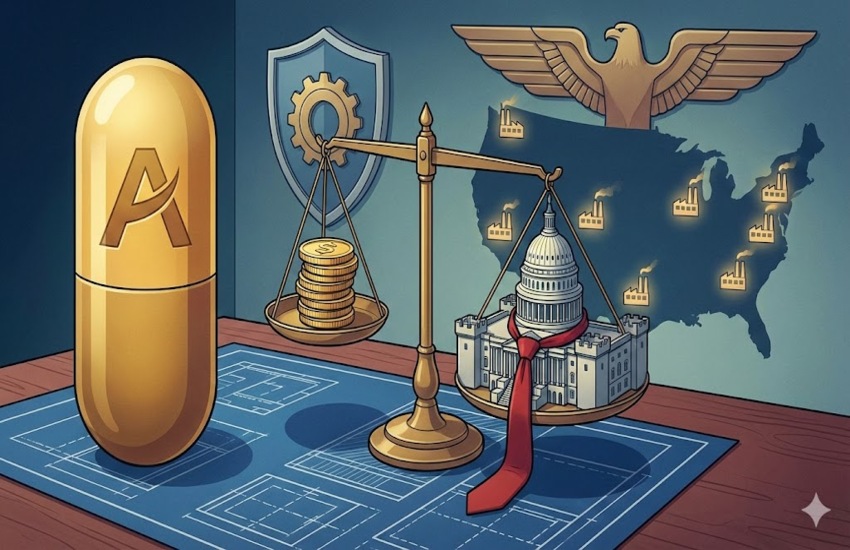
AbbVie (NYSE:ABBV) just made a bold move—and the stakes are massive. The company agreed to invest $100 billion into U.S. operations over the next decade in exchange for protection from tariffs and future government drug pricing mandates. The deal, struck with the Trump administration, marks one of the largest public-private partnerships in the pharmaceutical space and may set a new precedent for how Big Pharma plays ball with Washington. As part of the package, AbbVie also agreed to lower prices on Medicaid drugs and expand direct-to-patient sales via the TrumpRx portal.
This high-profile “AbbVie Trump investment deal” raises a fundamental question: is the trade-off worth it? On the surface, it looks like a win-win. AbbVie locks in regulatory certainty, while the government gets lower Medicaid costs and new domestic manufacturing jobs. But the underlying motivations run deeper. In this article, we unpack why AbbVie agreed to the package, what it means for the company’s margins, supply chain strategy, and pricing power—and whether others might follow suit.
Tariff & Pricing Protections Improve Margin Visibility & De-Risk U.S. Exposure
For AbbVie, navigating the post-IRA (Inflation Reduction Act) world has meant staring down increased price pressure in the U.S.—the most profitable drug market on Earth. By securing an exemption from future pricing mandates and tariffs through the AbbVie Trump investment deal, the company essentially bought itself a rare commodity in healthcare: predictability.
With Washington ramping up its push on drug price negotiation and import restrictions, the idea of locking in a regulatory buffer is appealing. These protections give AbbVie better visibility into its cost structure, which is crucial given that 75% of its revenues currently come from the U.S. market. In return, AbbVie has offered Medicaid price concessions—a move that shaves near-term revenue but may insulate the company from more punitive pricing in the long run.
However, these trade-offs come with risk. Margin improvements are contingent on consistent execution. There’s no guarantee future administrations will honor these protections, or that courts won’t challenge the legality of such bespoke arrangements. Nonetheless, for now, the deal offers an asymmetric upside: AbbVie protects one of its most vulnerable flanks while shaping the terms of its regulatory reality.
Medicaid Concessions Trade Near-Term Revenue For Regulatory Certainty & Access
AbbVie’s willingness to offer lower Medicaid prices might seem counterintuitive at first—especially given its premium product portfolio and reputation for pricing power. But this component of the AbbVie Trump investment deal reflects a calculated move. By conceding price on one front, AbbVie gains stability and perhaps avoids tougher future regulation.
Medicaid pricing pressure has been a growing thorn for biopharma. With the IRA giving the federal government more teeth, manufacturers like AbbVie face tough questions around the sustainability of U.S. pricing. Rather than wait for the hammer to fall, AbbVie has opted to act preemptively. In exchange for the lower Medicaid prices, the company is carving out space to preserve pricing in commercial and Medicare Part D markets.
The near-term cost? Lower average selling prices on certain products. That could impact revenue growth in the next few quarters. But the strategic bet is that this concession heads off more damaging, broad-based price controls. Moreover, it allows AbbVie to remain a preferred supplier in federal programs—securing access to millions of patients without the cloud of unpredictable pricing policy hanging overhead.
$100B U.S. Buildout Strengthens Supply Resilience & Political Alignment
The headline figure—$100 billion in U.S. investments—isn’t just for show. AbbVie is already breaking ground on a new active pharmaceutical ingredient (API) manufacturing facility in North Chicago and expanding biologics production in Worcester. These capital outlays serve several functions: they derisk the company’s supply chain, win political favor, and create future tax-advantaged manufacturing capacity.
The COVID-era taught pharma a painful lesson: supply chain concentration is a vulnerability. With bipartisan support for reshoring critical production, AbbVie’s U.S. buildout makes political and operational sense. The fact that it’s part of the AbbVie Trump investment deal just adds another layer of alignment. For an industry constantly battling public perception and policy scrutiny, being the poster child for domestic job creation has strategic value.
But $100 billion is not chump change. Investors will rightly ask whether these projects offer sufficient return on capital. In the short term, capex spending will weigh on free cash flow. However, AbbVie’s long-term margin structure could benefit if this investment reduces dependence on foreign CMOs and enhances pricing leverage with payers who prioritize local supply security.
TrumpRx Direct-To-Patient Channel Shifts Pricing Power & Distribution Economics
Another under-the-radar but critical part of the AbbVie Trump investment deal is the expansion of the TrumpRx portal. Through this government-linked platform, AbbVie can sell certain drugs directly to patients—bypassing traditional pharmacy benefit managers (PBMs) and their rebate-heavy economics.
This move could fundamentally alter AbbVie’s go-to-market strategy. By going direct, the company gains more control over pricing and customer data. It could also simplify patient access, especially for drugs where PBMs have created convoluted prior authorization barriers. In short, it cuts out the middlemen.
Still, there are headwinds. The TrumpRx channel is politically branded and may face resistance under future administrations. There’s also a question of scale: can it meaningfully displace existing distribution pathways? Yet if successful, this shift could offer a blueprint for how pharma regains pricing autonomy in the U.S. marketplace.
Over time, the TrumpRx component of the AbbVie Trump investment deal could spark broader experimentation with patient-facing models. It also puts pressure on PBMs to justify their cut of the economics if manufacturers can deliver drugs directly to patients with lower copays and less friction.
Final Thoughts: A Strategic Bet With Uncertain Payoffs
AbbVie’s $100 billion deal with the Trump administration is less a one-off news cycle than a test case for a new pharma playbook. The package blends investment, policy alignment, and market restructuring. At its core, the AbbVie Trump investment deal reflects a trade: near-term pricing concessions and massive capital outlays in exchange for protection, access, and autonomy.
The benefits are tangible. Margin stability improves with tariff and pricing insulation. Manufacturing risk is reduced through domestic buildouts. And a direct-to-patient strategy offers the promise of pricing power in a fractured PBM landscape. But the risks are real, too. Political winds shift. Regulatory exemptions aren’t permanent. And $100 billion is a steep bet on a strategy whose success depends on execution and durability.
From a valuation lens, AbbVie trades at a forward EV/EBITDA multiple of around 14.4x and an NTM P/E of 16.8x. That places it in line with peers—suggesting the market sees this as a balanced risk-reward. LTM P/E sits at a much loftier 166x, though that’s skewed by non-recurring items. The key question now is whether the market will reward AbbVie for its first-mover role in setting a new public-private playbook.
In the meantime, the AbbVie Trump investment deal may prove to be a leading indicator of where biopharma and policy are headed next.
Disclaimer: We do not hold any positions in the above stock(s). Read our full disclaimer here.


