

Continue Reading With Our 7-Day Free Trial
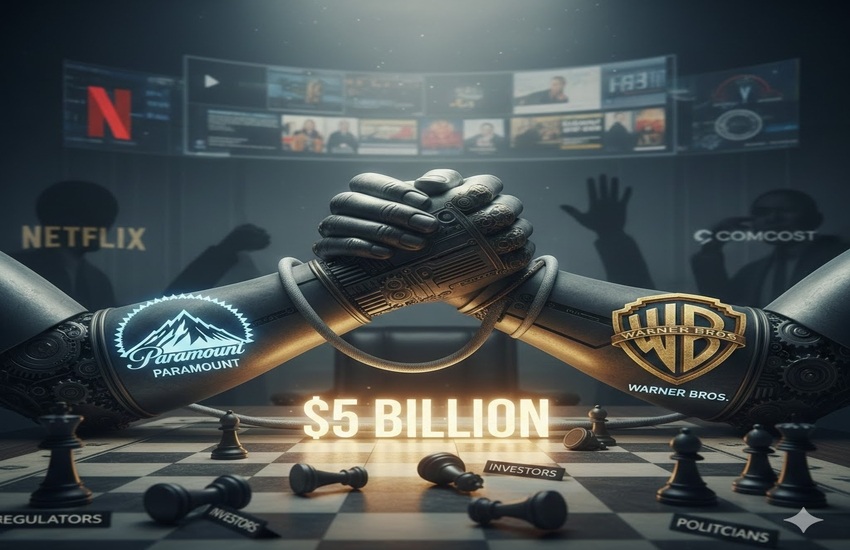
The gloves are off in the media megamerger race. In a bold, attention-grabbing move, Paramount Skydance Corp. has hiked the breakup fee in its bid to acquire Warner Bros. Discovery to a whopping $5 billion. That’s more than double its original offer and a clear signal to regulators, competitors, and investors: Paramount wants this deal to happen. With rival offers on the table from Netflix and Comcast—each structured differently—this bidding war is about more than just ownership. It’s about who will control the next chapter of Hollywood in an era where streaming dominates, linear TV fades, and political scrutiny is intensifying. As Warner Bros. evaluates offers, the Paramount Warner Bros merger is shaping up to be one of the most consequential showdowns in modern media history. But what’s really at stake, and why is Paramount going all in? Let’s unpack the bullish and bearish forces driving this blockbuster drama.
Paramount’s All-In Play: Why That $5 Billion Breakup Fee Speaks Volumes
At first glance, a breakup fee might seem like legal fine print. But this $5 billion fee isn’t just a contractual footnote—it’s a power move. Breakup fees are insurance policies that one party pays the other if the deal falls apart after signing. By more than doubling the original $2.1 billion offer, Paramount is making two key statements: they’re confident in their chances to clear regulatory hurdles, and they want to outshine Netflix and Comcast.
The Paramount Warner Bros merger isn’t just about content libraries or subscriber counts. Paramount is the smallest of the three suitors by revenue and market cap, but it’s betting big on execution and government favor. By sweetening the breakup fee, it’s signaling to Warner Bros. that it’s not here to waste time. It’s also a clever way to appear more “serious” than Netflix—whose higher cash bid may come with antitrust red flags—and Comcast, which has a more complex carveout plan for Warner Bros.’ cable assets. This fee is a security blanket for Warner Bros. and a megaphone for Paramount’s confidence.
This move could sway Warner Bros.’ board in Paramount’s favor, especially considering the deal’s political optics. With support from Oracle chairman Larry Ellison (and connections to former President Donald Trump), the Skydance-led Paramount may believe it has an edge with a Republican-leaning regulatory environment. The breakup fee helps offset concerns about deal failure, job losses, or regulatory blocks—and it’s a bold play to reframe Paramount as a legitimate top-tier consolidator in a shrinking field.
Politics & Power: Paramount’s Relationship With D.C. May Tip The Scales
Regulatory approval is the elephant in the screening room—and all three bidders face it. But here’s where Paramount thinks it has an edge. Netflix has drawn antitrust concern from Republican lawmakers like Rep. Darrell Issa, who fear that absorbing Warner Bros. would create a streaming superpower. Comcast, with its vast cable footprint, invites even more scrutiny. Paramount? It’s smaller, nimbler, and—crucially—tightly linked to Washington insiders.
Since the merger with Skydance, Paramount is controlled by the Ellison family. Oracle’s Larry Ellison, a vocal supporter of Trump, has significant influence. His son David, Paramount’s new CEO, maintains strong relationships in D.C., even mentioning his good rapport with the Trump administration publicly. In an environment where federal agencies like the DOJ are increasingly active in media regulation, those ties could matter more than ever.
The Paramount Warner Bros merger may still raise eyebrows in antitrust circles, but the company’s size relative to Netflix and Comcast makes it easier to argue the deal wouldn’t reduce competition. If Warner Bros. wants to bet on the bid most likely to pass, Paramount’s perceived political advantage could weigh heavily. Even if Netflix offers more money, a deal that actually closes is worth more than one that gets bogged down in litigation or killed by regulators.
Still, it’s not a slam dunk. White House officials have already raised concerns about Netflix’s bid. If the political winds shift again, especially in an election year, Paramount’s current advantage could vanish quickly. For now, though, it looks like they’re playing the regulatory chessboard one move ahead.
Streaming Scale & Studio Strength: Paramount Is Leaning Into Its Legacy
If you listen to CEO David Ellison, Paramount’s strategy is crystal clear: scale the streaming business, revive the studio, and use technology to drive everything forward. In just 96 days since the Skydance merger, the company has restructured leadership, ramped up content investments, and mapped out a bold, multi-year transformation. It’s aiming for $30 billion in revenue and $3.5 billion in adjusted OIBDA by 2026—with at least $1.5 billion in annual programming investments planned across theatrical, streaming, sports, and gaming.
The Paramount Warner Bros merger would supercharge this plan. Warner Bros. adds HBO, CNN, and a library that could anchor Paramount+ as a true global streaming contender. Right now, Paramount+ has fewer than 80 million subscribers—not bad, but nowhere near Netflix or Disney+. The merger would expand its reach, add premium content, and provide major sports rights and tentpole franchises.
Paramount’s direct-to-consumer strategy also includes consolidating its fragmented tech stack—Paramount+, Pluto, and BET+—into one unified platform. That’s expensive but essential. With new partnerships (UFC, Duffer Brothers, South Park), the content machine is revving again. The studio is on track to double its theatrical output to 15 films a year by 2026.
The merger would also likely unlock new licensing and syndication opportunities, especially internationally. It could create real economies of scale—crucial for a company trading at just 1.0x LTM revenue and 10.77x LTM EBITDA. That’s cheap compared to its peers, suggesting Wall Street hasn’t priced in a turnaround yet.
The Big If: This Is Still A High-Risk, High-Cost Bet
Now for the bear case—because there’s plenty of risk in this story. Paramount’s strategy might be aggressive, but it’s also expensive. Between tech upgrades, content deals, and studio expansion, cash burn is significant. Free cash flow for 2025 is projected to remain negative when adjusted for restructuring costs. The firm already has over $10 billion in debt, and despite long maturities, interest costs aren’t going away.
Critically, the streaming war has become a volume game. Paramount+ is growing, but still far behind Netflix, which can spend double (or triple) on content annually. The very fact that Paramount has to overcompensate with a $5 billion breakup fee says something: they’re not the highest bidder, just the most politically palatable. That’s a fragile edge, especially if Warner Bros. decides it wants top dollar.
Linear TV, which still makes up much of Paramount’s revenue, continues its slow bleed. Advertising dollars are down, cable subs are falling, and while CBS remains strong with the NFL and March Madness, the long-term trend is not in its favor.
Then there’s the question of integration. Merging two media giants is never easy. Layoffs, culture clashes, and brand dilution are all real risks. If the merger goes through but fails to deliver rapid DTC growth and margin expansion, Paramount may find itself financially stretched, strategically stuck, and competitively outgunned.
Final Thoughts: Paramount’s Bold Bet Reflects a Shifting Media Power Game
Paramount’s $5 billion breakup fee offer in its bid for Warner Bros. Discovery is more than just financial window dressing—it’s a signal of intent in a fiercely contested, high-stakes game. With Netflix offering a higher bid and Comcast proposing a different structure altogether, Warner Bros. has options. But Paramount is gambling that a lower-risk, regulator-friendly deal—backed by strong D.C. ties and a clear growth strategy—might win out.
The Paramount Warner Bros merger, if completed, could give Paramount the scale it needs in streaming and revive its studio business. But it comes with high cost, high risk, and no guaranteed upside. The company’s LTM valuation multiples reflect this tension: 1.00x revenue, 10.77x EBITDA, and a price-to-sales ratio still well below historical averages. Wall Street remains skeptical.
This bidding war is more than a media merger—it’s a referendum on the future of the entertainment industry. The next few weeks could reshape Hollywood’s pecking order for the next decade. Keep your popcorn handy.
Disclaimer: We do not hold any positions in the above stock(s). Read our full disclaimer here.