


Continue Reading With Our 7-Day Free Trial
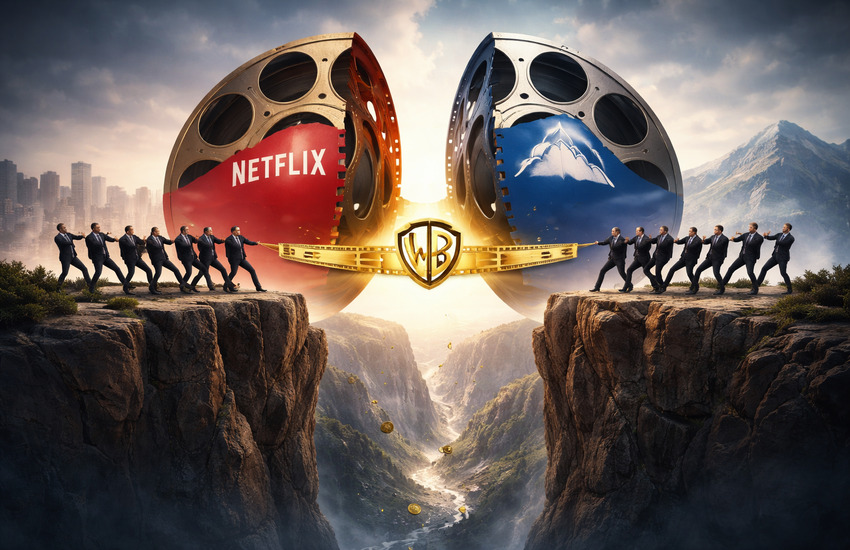
Warner Bros. Discovery agreed to sell its studios and HBO Max to Netflix, locking in a signed transaction that reshapes the company. Now activist investor Ancora has built a stake and is urging the board to reconsider in light of a rival offer from Paramount.
The market sees a bidding war and assumes higher price wins. What matters more is how incremental dollars translate into real shareholder value versus execution risk.
Higher Bid Potential & Shareholder Value Upside
Paramount’s offer stands above Netflix’s agreed price and reframes the valuation discussion. The gap forces shareholders to examine whether the board fully tested competitive tension before committing to the signed deal.
Ancora’s argument centers on engagement and leverage. If the higher proposal improves further, the spread becomes material for equity holders. More important is the second-order effect: even without switching buyers, credible competition can extract better economics from the existing agreement.
What’s harder to quantify is how much negotiating leverage still remains before the vote and whether the board can translate that pressure into tangible improvements without destabilizing deal certainty.
Paramount’s revised bid adds protection. A 25-cent quarterly ticking fee cushions regulatory delays, and covering the $2.8 billion breakup fee lowers the cost of exiting Netflix. It also keeps CNN, TNT, Discovery, and the studio under one roof — a structure some investors believe preserves greater long-term portfolio value. Reopening talks could even strengthen Warner’s leverage and extract better terms.
Still, a higher price doesn’t equal higher certainty. Regulatory approval and execution risk matter when billions are involved, and switching paths could introduce fresh complexity.
Strategic Control & Long-Term Competitive Positioning
The Netflix deal splits Warner. Studios and HBO Max go to Netflix. Cable networks spin into a separate entity. That creates two focused businesses, but also permanently separates high-growth streaming from steady cash-flowing linear assets.
If Warner walks away, it preserves optionality. Paramount’s bid maintains integration. That could allow for deeper franchise coordination across film, streaming, consumer products, and global distribution. Warner has recently emphasized tighter IP management, from DC to Harry Potter to Game of Thrones. Keeping everything under one umbrella could enhance that strategy.
There is also competitive positioning to consider. A Netflix-owned Warner studio would become part of the dominant global streaming platform. That offers scale and distribution muscle. But it also means Warner’s creative assets become one division inside a much larger tech-driven company.
Under Paramount, Warner would likely remain a central pillar of the combined business. That might give its brands greater prominence. Investors must weigh whether scale under Netflix outweighs influence under Paramount.
Then there is the regulatory narrative. Paramount argues its combination would face fewer antitrust obstacles than a Netflix tie-up. Netflix already dominates subscription streaming. Lawmakers have questioned market concentration. That scrutiny could intensify.
Walking away could reduce antitrust overhang if Paramount’s deal is viewed as more complementary than consolidating. That argument is not guaranteed to win, but it shapes the risk profile.
Strategy is not just about today’s price. It is about who controls the library in ten years.
Deal Certainty, Regulatory Risk & The $2.8 Billion Question
Signed deals carry weight. The Netflix agreement is executed. Financing is in place. Terms are clear. That provides a degree of certainty that markets typically reward.
Abandoning the Warner Bros. Discovery Netflix Deal introduces legal and reputational risk. The $2.8 billion termination fee is not trivial. While Paramount has offered to cover it, execution still depends on its own financing and regulatory approvals. If that deal fails after Warner walks, shareholders could face prolonged uncertainty.
Regulatory review is a wild card. Netflix is undergoing U.S. antitrust scrutiny. Senate hearings have already surfaced concerns. The more regulators focus on streaming concentration, the longer approval timelines may stretch. Paramount’s ticking fee attempts to compensate for delay, but it does not eliminate regulatory unpredictability.
Timing also matters. Warner plans a shareholder vote by early spring. A proxy fight could follow. Even if Ancora’s stake is less than 1%, activism can sway sentiment. The annual meeting timing complicates any board challenge. Governance noise often weighs on stock performance.
Investors may ask: Is incremental price worth months of uncertainty? Markets discount ambiguity. If the board appears divided or indecisive, multiples can compress.
Walking away may increase optionality. It may also increase volatility.
Proxy Fight Risk & Market Confidence
Ancora’s history suggests it is not shy about activism. It has pushed for mergers and opposed deals in other industries. Here, it is signaling possible director nominations. Even with a small stake, activism can galvanize larger holders who are undecided.
A proxy fight would shift the narrative from strategic choice to governance battle. That can distract management at a critical time. Warner’s Q3 results showed improving studio performance, streaming EBITDA growth, and debt reduction. Those fundamentals risk being overshadowed by boardroom conflict.
Market confidence is fragile in contested transactions. If shareholders sense internal disagreement, the stock can trade more on speculation than fundamentals. That often widens spreads between deal price and market price. Arbitrage players step in. Long-term holders may hesitate.
There is also management credibility to consider. If the board reverses course after signing with Netflix, investors may question strategic discipline. Conversely, ignoring a higher bid could raise fiduciary concerns. Either path carries reputational consequences.
In short, walking away is not just a financial calculation. It is a governance event. Proxy fights rarely enhance near-term stability.
The board must balance fiduciary duty with execution risk, all under a very public spotlight.
Final Thoughts: A Valuation Puzzle Wrapped In Strategic Risk
Warner stands at a crossroads. The upside of walking away includes a potentially higher price, broader strategic control, and reduced antitrust concentration concerns. The downside includes termination costs, regulatory delay, governance turmoil, and market volatility.
From a valuation perspective, Warner trades around 2.6x LTM revenue and roughly 12.8x LTM EBITDA. Those multiples are not stretched for a global content powerhouse with improving studio momentum. Yet forward free cash flow yields have compressed sharply from above 20% to near mid-single digits. That suggests the market already prices in improvement and deal optionality.
If a higher bid materializes, valuation could expand. If uncertainty drags on, multiples may compress.
The board’s task is not easy. Shareholders must weigh immediate premium against execution certainty. Walking away could unlock more value. It could also erode confidence.
Sometimes the hardest decision in corporate finance is choosing between a signed check and a bigger promise.
Disclaimer: We do not hold any positions in the above stock(s). Read our full disclaimer here.