

Continue Reading With Our 7-Day Free Trial
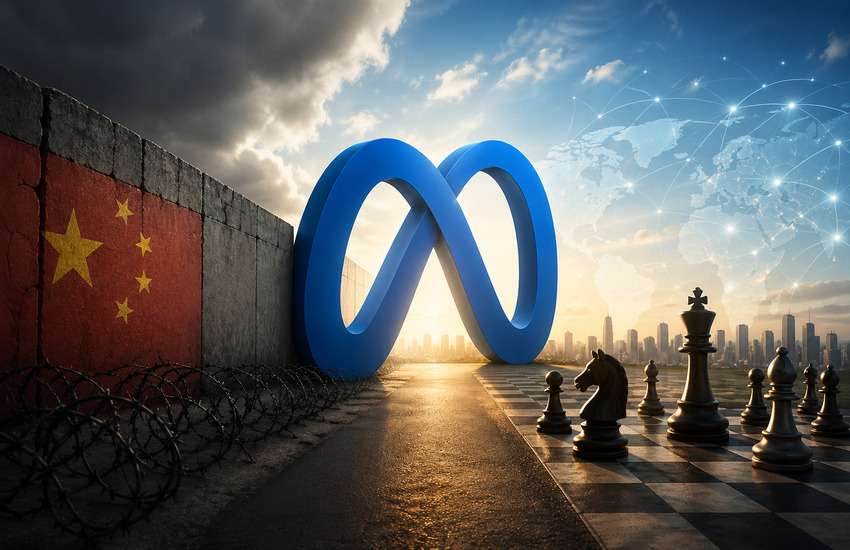
Meta Platforms (NASDAQ:META) just got handed the kind of headline no CEO wants: China blocked its $2.5 billion acquisition of AI startup Manus and ordered the deal to be unwound. On the surface, that sounds like a clean loss. A splashy AI purchase gets stuck in geopolitics. Regulators get angry. Executives get trapped in a cross-border mess. Investors start asking whether Meta’s AI shopping spree has hit a wall. But the better read may be more interesting. Meta might not have lost the AI war here. It may have avoided fighting the wrong battle. Manus gave Meta a shortcut into AI agents, but shortcuts can become handcuffs. In a world where AI is becoming a national-security asset, flexibility may matter more than ownership. Meta did not just lose China. It may have escaped a deal that came with more baggage than upside.
Meta Did Not Need Manus As Much As It Looked
The biggest twist is simple: Manus looked useful, but not essential. The startup had built an AI agent capable of doing complex tasks like research reports and presentations. That fits nicely with Meta’s broader AI push. It also explains why a $2.5 billion price tag made sense. Meta wants agents inside ads, commerce, messaging, and productivity tools. Manus could have helped speed that up.
But Meta’s latest earnings call suggests the company is already building much of this itself. Mark Zuckerberg said agents are “really” starting to work and framed 2026 as a year of major AI acceleration. Meta is also working to merge large language models with its recommendation systems across Facebook, Instagram, Threads, WhatsApp, and ads. That matters because Meta’s edge is not just model quality. Its edge is distribution.
That is the hidden point. Manus was a tool. Meta is trying to turn its entire ecosystem into an AI operating layer. With more than 3.5 billion daily users across its apps, Meta already has the audience, context, engagement loops, and monetization pipes. A standalone agent can be smart. An agent embedded into Instagram, WhatsApp, and Meta’s ad system can be commercially dangerous. Losing Manus may slow one path, but it does not remove the destination.
China’s Block May Have Removed A Geopolitical Liability
The Manus deal came with a giant asterisk: China. Beijing’s regulators blocked the transaction on national-security grounds and worried that Chinese AI know-how could move abroad. That is not a small issue. This was not just a normal merger review with extra paperwork. Chinese authorities had already called in Manus co-founders for discussions, and the situation reportedly included restrictions on leaving the country during the investigation.
That creates a hard question for Meta. How do you integrate a politically sensitive AI asset when the asset’s origin, people, ownership history, and intellectual property sit inside a worsening U.S.-China tech rivalry? The answer is: very carefully, and maybe not very quickly. Every product decision could become a regulatory headache. Every talent move could become a diplomatic issue. Every model update could invite questions over where the technology came from and who controls it.
So yes, losing the deal hurts. Meta had already begun integrating Manus tools into some products, which makes any unwind messy. But a deeper integration could have been messier. In an AI Cold War, owning a China-linked agent company may not be a trophy. It may be a liability with a nice demo video. Meta’s forced exit could become an ugly but useful reset.
The Real AI War Is About Distribution & Context
A lot of AI commentary still treats the race like a beauty contest for models. Who has the smartest chatbot? Who has the flashiest benchmark? Who has the best demo? That framing misses Meta’s actual advantage. Meta does not need to win by having the most glamorous standalone AI app. It can win by putting AI inside habits that already exist.
The earnings call made that clear. Meta is using AI to improve recommendations, personalize feeds, increase ad performance, translate videos, create media, power business assistants, and support commerce. Susan Li said AI translated videos are already watched by hundreds of millions of people daily. She also said Meta AI personalization is showing stronger engagement in early testing. These are not science projects. They are product loops tied directly to user time and advertiser dollars.
That is why the Manus setback may be less damaging than it looks. China blocked Meta from buying an agent. But Meta is building agents around its existing data, social graph, business tools, and ad engine. That is a very different battlefield. A tool can answer a prompt. Meta can place an AI assistant inside commerce, messaging, content, and advertising workflows. The boring word for that is “integration.” The spicy word is “control.”
Meta Is Choosing Infrastructure Over Shortcuts
The clearest sign of Meta’s priorities is not the Manus drama. It is the spending plan. Meta expects 2026 capital expenditures of $115 billion to $135 billion, driven by AI infrastructure and core business needs. That is not a casual bet. That is a company trying to build the factory floor for AI at massive scale.
This spending also explains why losing Manus may not change the bigger story. Meta is not just buying AI features. It is building compute capacity, custom silicon, model infrastructure, ranking systems, business AI tools, and internal agentic coding systems. Susan Li said Meta is still compute constrained, even after ramping infrastructure in 2025. That is a strange but important problem. Demand for AI inside Meta is growing faster than supply.
Of course, this comes with risk. Heavy AI spending can pressure free cash flow. Buybacks may take a back seat. Investors may question whether the return on investment arrives quickly enough. But strategically, this approach gives Meta more control than an acquisition like Manus ever could. Buying Manus would have given Meta a product. Building Meta Compute gives it a platform. In a fragmented AI world, that distinction matters.
Final Thoughts
Meta’s failed Manus acquisition is easy to frame as a setback. China blocked the deal, the unwind looks complicated, and the broader message is clear: AI assets are now geopolitical assets. That creates real uncertainty. It also highlights why Meta’s own infrastructure-heavy strategy may be the more durable path. The company is trying to embed AI across feeds, ads, messaging, commerce, media creation, and wearables rather than relying on one acquired agent.
The valuation looks neither obviously cheap nor wildly stretched. As of April 27, 2026, Meta traded at about 8.59x LTM EV/revenue, 16.94x LTM EV/EBITDA, 20.73x LTM EV/EBIT, and 28.89x LTM P/E. Those multiples price in a strong core advertising business and meaningful AI upside. They also leave less room for disappointment if spending rises faster than returns. The balanced view is simple: Meta may have lost Manus, but it did not lose the AI race. It may have just avoided buying a shortcut that came with border controls.
Disclaimer: We do not hold any positions in the above stock(s). Read our full disclaimer here.