

Support 100% Independent Research With Our 7-Day Free Trial
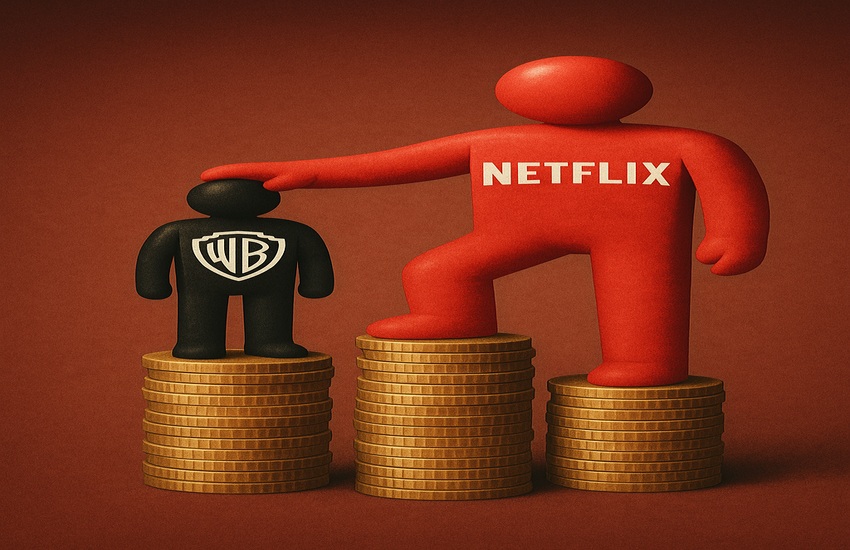
The streaming wars just got their biggest twist yet. Netflix, already the world’s largest video platform by subscribers, is poised to acquire Warner Bros Discovery in a mammoth $82.7 billion cash-and-stock deal. If completed, the transaction would bring HBO, HBO Max, and an iconic catalog—think Game of Thrones, The Big Bang Theory, and the entire DC Universe—under Netflix’s roof. The companies expect the deal to close within 12–18 months, following Warner’s spin-off of Discovery Global.
The move comes amid a high-growth phase for Netflix. Ads revenue has doubled, live content is ramping up, and KPop Demon Hunters just became the platform’s most-viewed animated feature ever. Netflix’s Q3 2025 engagement hit all-time highs in the U.S. and U.K., and its outlook for 2026 includes bold plays in gaming, interactive content, and international expansion. But folding Warner Bros into the mix could turbocharge all of that—or complicate it.
Let’s unpack the synergies that Netflix could extract from this headline-grabbing acquisition.
Content Depth & Platform Differentiation
Netflix has spent over a decade perfecting its content engine, but Warner Bros offers something different: legacy. This isn’t about just padding the library with more shows. It’s about owning franchises that already define pop culture. By integrating Game of Thrones, The Sopranos, Harry Potter, and Friends into its core catalog, Netflix wouldn’t just be the most ubiquitous streamer—it would control a sizable chunk of the TV lexicon.
More than nostalgia, this gives Netflix deeper control over viewer behavior. Right now, a hit like Suits can dominate Netflix just because it’s well-placed in the UI. Now imagine the gravitational pull of a GoT prequel as a Netflix original. This adds serious stickiness to subscriber engagement. And it also solves a growing challenge: content saturation. In a world where everyone’s library is decent, owning truly premium IP is the only real moat.
The Netflix Warner Bros acquisition could let the company extend its lead without chasing buzzy, short-lived shows. Instead, Netflix could reshape cultural moments around iconic franchises it now owns—and monetize that through cross-category expansions like toys, games, and live events.
Global Market Penetration & Local Production
Warner Bros brings global storytelling heft, and that fits right into Netflix’s expansion blueprint. Netflix is still underpenetrated in markets like India, Southeast Asia, and Latin America. By leveraging Warner’s internationally recognizable properties and combining that with Netflix’s algorithm-fueled localization strategy, the company can supercharge its relevance across regions.
For example, Harry Potter doesn’t need translation to connect with fans in Brazil or Indonesia. But a Netflix-original series set in that universe, shot locally with native language and cast? That’s global content with regional resonance—something only a few companies can pull off. Warner also brings deep production infrastructure that complements Netflix’s build-up in countries like South Korea, Spain, and Germany.
The Netflix Warner Bros acquisition would give Netflix the raw material to localize globally at scale. And because Netflix already excels at surfacing the right content to the right user, this opens new doors to retention and engagement. That also translates to better ad targeting in its growing ad-supported tier, especially in cost-sensitive markets.
Advertising Scale & Cross-Selling Momentum
Netflix has made real strides in advertising. 2025 ad revenue more than doubled, and new integrations with Amazon’s DSP and global measurement tools are laying the foundation for programmatic scale. But Netflix still lacks something key: premium content that advertisers can anchor large campaigns around. Enter HBO.
HBO programming—think Succession, The Last of Us, House of the Dragon—already commands prestige status. With that IP in-house, Netflix can build premium ad packages that rival traditional TV networks. Imagine live events around a DC movie drop or interactive ad formats tied to Euphoria. Those are brand-safe environments with pop culture gravity.
The Netflix Warner Bros acquisition can also extend the ad suite’s capabilities across a wider content base, allowing Netflix to attract higher CPMs and broader advertiser categories. It could even accelerate the rollout of interactive ads and targeted offerings based on genre preferences, which Netflix already hinted at for 2026. HBO’s library also gives Netflix a licensing playground to experiment with FAST (free ad-supported streaming TV) channels, a model it’s yet to fully tap.
Operational Scale & Strategic Leverage
Netflix is famously lean and focused. It doesn’t carry sports rights bloat. It exited DVDs early. It builds, not buys. But Warner Bros comes with considerable operational heft—film studios, distribution pipelines, and global infrastructure. The question is: can Netflix use that to its advantage without diluting its DNA?
There’s evidence it could. Netflix is already experimenting with theatrical releases for major animated hits like KPop Demon Hunters, which stirred demand for toy deals with Mattel and Hasbro. Warner’s established theatrical network gives Netflix the option to expand these hybrid models—premiering originals in theaters, collecting box office revenue, and then moving them to streaming to build long-tail engagement.
The Netflix Warner Bros acquisition may also yield cost synergies. Netflix expects $2–3 billion in annual savings from the integration. Combining tech stacks, optimizing content spend, and streamlining back-office operations could create meaningful margin lift. Netflix’s forward-looking EBIT margins are already projected to exceed 36% by 2030. Warner could accelerate that path.
But more importantly, this gives Netflix leverage—over talent, advertisers, and even regulators. Owning a historic studio can transform how the company negotiates future deals and how it’s perceived in Washington and Hollywood.
Final Thoughts: Strategic Jackpot Or Integration Overload?
This potential merger is both a bold bet and a strategic puzzle. The Netflix Warner Bros acquisition promises unmatched synergies—from premium IP to global scale, ad growth, and deeper engagement. But it also carries integration risk. Warner has legacy baggage, cultural differences, and regulatory hurdles. Managing that while keeping Netflix’s brand lean and tech-forward won’t be easy.
On valuation, Netflix doesn’t come cheap. As of December 2025, it trades at a lofty 43x LTM earnings and 34x LTM EBITDA. That’s rich, even for a high-growth platform with $9 billion in 2025 free cash flow. If Warner Bros is folded in, investors will need to weigh potential revenue upside against dilution risk and integration drag.
Still, Netflix has rarely chased deals. If it moves forward, expect a rationale grounded in reinforcing its flywheel—not just getting bigger, but becoming more uncuttable.
Whether or not the deal closes, the conversation around it reveals where Netflix wants to go next: deeper, broader, and harder to beat.
Disclaimer: We do not hold any positions in the above stock(s). Read our full disclaimer here.