


Continue Reading With Our 7-Day Free Trial
Most people still think of Tesla (NASDAQ:TSLA) as a car company. That perceptiotesla-quietly-becoming-electric-utilityn made sense a few years ago. But the latest developments suggest something much bigger may be unfolding.
Tesla recently secured a license to supply electricity to households and businesses across England, Scotland, and Wales. The approval from Britain’s regulator allows the company to enter a competitive energy market dominated by utilities like British Gas, E.ON, and EDF. At first glance, this may appear to be a small step. But the context around Tesla’s energy ambitions tells a much larger story.
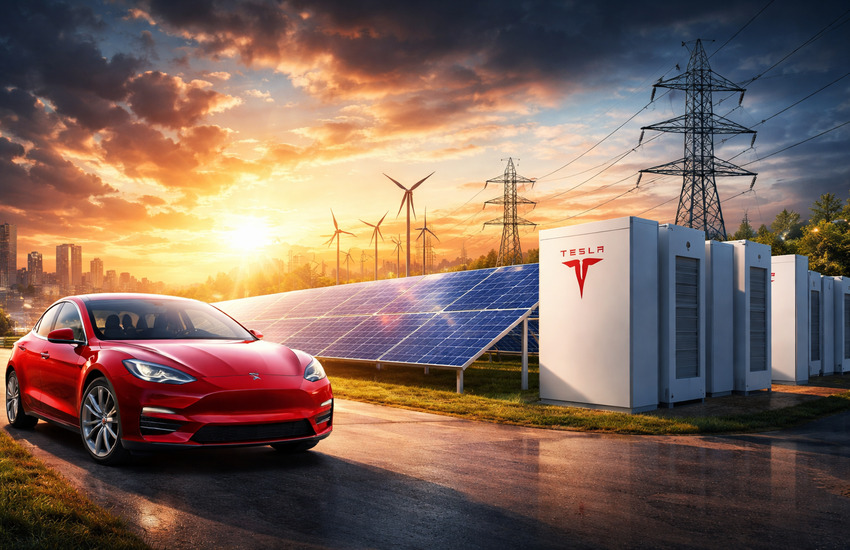
Over the past few years, Tesla has quietly built a portfolio of energy products that spans solar panels, battery storage, grid infrastructure, and electricity retail. When viewed together, these pieces start to resemble something familiar: the blueprint of a modern utility company. The difference is that Tesla’s version relies heavily on distributed batteries, software, and renewable energy.
So the real question may not be whether Tesla can sell electricity in Britain. The more interesting question is whether Tesla is gradually positioning itself to reshape how electricity is generated, stored, and delivered.
Tesla Electric Expansion & Entry Into Retail Power Markets
Tesla’s electricity supply license in Britain represents an important milestone for its energy strategy. The approval allows Tesla to sell electricity directly to homes and businesses across most of the United Kingdom. This puts the company in direct competition with long-established energy providers.
Traditional utilities typically operate large centralized power plants and manage transmission networks. Tesla’s approach looks very different. The company focuses heavily on distributed energy systems. These include residential batteries, rooftop solar panels, and grid-scale storage installations.
Tesla already operates a retail electricity service called Tesla Electric in parts of Texas. That market allows households to choose their electricity provider. Tesla’s plan includes discounted electricity rates for owners of Tesla vehicles and Powerwall batteries. These plans encourage customers to integrate their cars, homes, and energy systems into a single ecosystem.
The British license suggests Tesla wants to replicate this model internationally. Entering the retail electricity market gives the company a direct relationship with energy consumers. That relationship could become valuable as distributed energy technologies grow more common.
For now, Tesla’s role in Britain will focus solely on electricity supply. Many established utilities there also provide gas services. But the long-term opportunity could extend beyond simply selling power. Tesla’s broader energy platform may eventually allow it to influence how electricity is produced, stored, and consumed.
Powerwall Batteries & Virtual Power Plants
Tesla’s energy ambitions become clearer when looking at its battery ecosystem. The company’s residential battery product, Powerwall, allows homeowners to store electricity generated from solar panels or purchased from the grid.
That capability can transform a home into a small energy hub. Instead of consuming electricity only when it is generated, homeowners can store energy and use it later. Batteries also provide backup power during outages.
Tesla has taken this concept further through its Virtual Power Plant programs. These programs connect thousands of home batteries into a coordinated network. When the grid needs extra electricity, participating homes can feed stored energy back into the system.
In return, homeowners receive credits on their electricity bills. The system effectively turns residential batteries into distributed power stations. Instead of relying solely on large utilities, the grid can draw power from thousands of smaller sources.
Tesla has already launched such programs in Texas. The company’s energy platform allows Powerwall owners to contribute electricity to the grid during periods of high demand. These distributed resources can help stabilize electricity systems during shortages or extreme weather.
If Tesla expands these programs globally, the implications could be significant. A network of connected batteries across homes and businesses could function as a decentralized energy grid. In that scenario, Tesla’s software platform would coordinate energy flows between homes, vehicles, and utilities.
Tesla Energy Growth & Massive Solar Ambitions
Tesla’s financial results show that the energy division is already growing rapidly. The company reported roughly $12.8 billion in energy revenue, representing over 26% year-over-year growth. Deployments of both Powerwall and the large-scale Megapack battery systems reached record levels.
Megapack installations are designed for utility-scale energy storage. These systems store electricity from renewable sources and release it when demand rises. Many grid operators use them to stabilize renewable-heavy power systems.
Demand for these systems has been strong worldwide. Tesla also indicated that its backlog for energy products remains robust. The company plans to increase deployments further with the launch of newer Megapack versions.
At the same time, Tesla is planning major investments in solar manufacturing. Elon Musk has stated that the company aims to eventually reach around 100 gigawatts of solar cell production per year. That scale would place Tesla among the larger global solar manufacturers.
The solar opportunity could be significant for electricity markets. Solar panels generate power during daylight hours but require storage to deliver electricity consistently. Tesla’s battery technology fits naturally into that equation.
Combining solar generation with battery storage allows electricity to be captured when it is abundant and released when needed. This pairing is becoming increasingly important as grids transition toward renewable energy sources.
Infrastructure Investments & The Future Energy Stack
Tesla’s leadership has repeatedly described the company’s current investment cycle as an infrastructure buildout. The firm plans to spend more than $20 billion in capital expenditures in the near term. These investments span battery factories, manufacturing facilities, and new energy technologies.
Infrastructure spending of this scale suggests Tesla is thinking beyond individual products. Instead, the company appears focused on building the systems that support large-scale energy networks.
Tesla’s approach involves integrating several components into a unified ecosystem. Solar panels generate electricity. Batteries store that electricity. Software platforms manage energy flows. Electric vehicles consume power and can potentially return electricity to the grid.
This vertical integration mirrors the structure of traditional utilities. The difference lies in the technologies involved. Instead of centralized power plants, Tesla’s model relies on distributed renewable generation and digital coordination.
Artificial intelligence may eventually play a role in managing these networks. Tesla’s software systems already coordinate large numbers of vehicles and energy devices. Over time, similar software could optimize energy usage across millions of homes and vehicles.
The company is still in the early stages of this strategy. But its growing investments in batteries, solar, and energy infrastructure suggest the long-term goal may extend far beyond selling electricity alone.
Final Thoughts
Tesla’s entry into Britain’s electricity market represents another step in the company’s evolving energy strategy. The move places the company alongside established utilities while expanding its reach beyond vehicles and batteries. Tesla’s growing portfolio now includes solar generation, residential storage, grid-scale batteries, and electricity retail services.
Taken together, these elements form an integrated energy ecosystem that could reshape how electricity systems operate. However, the long-term outcome remains uncertain. Electricity markets are highly regulated, and established utilities still control large portions of the grid infrastructure.
From a valuation perspective, Tesla’s stock continues to trade at elevated levels relative to traditional energy or automotive companies. Based on recent data, Tesla trades at roughly 15.3x LTM revenue, 133.9x LTM EBITDA, and around 367x LTM earnings. These multiples suggest investors are pricing in significant long-term growth expectations.
Whether Tesla ultimately becomes a major electricity supplier remains unclear. What is clear is that the company’s energy ambitions are expanding steadily. For now, Tesla’s utility ambitions remain an evolving story worth watching as the global energy landscape continues to change.
Disclaimer: We do not hold any positions in the above stock(s). Read our full disclaimer here.