

Support 100% Independent Research With Our 7-Day Free Trial
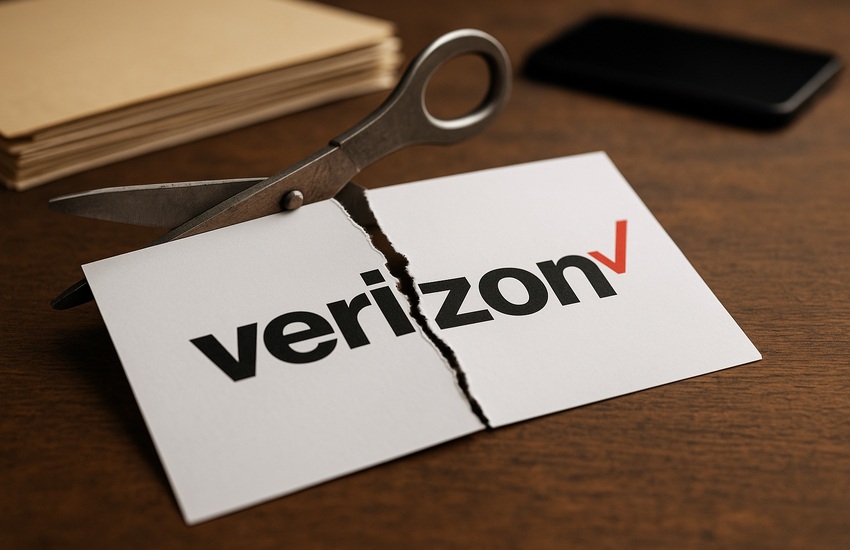
Verizon just made headlines with one of the largest layoffs in its history, cutting over 13,000 jobs. And if you’re wondering why, CEO Daniel Schulman says the decision wasn’t just tough—it was inevitable. In a candid all-hands meeting and follow-up earnings call, Schulman laid out exactly why Verizon needed to make drastic moves and how the company plans to turn things around heading into 2026. His plan? Strip away complexity, use AI to simplify offers, and rebuild trust with customers through better service and smarter marketing. This isn’t about trimming the fat for Wall Street—it’s about survival in a cutthroat telecom market. With Verizon losing market share and customers churning at an accelerating pace, Schulman believes the only way out is through aggressive changes across cost structure, customer experience, and capital discipline. Let’s break down the key drivers behind Verizon layoffs and 2026 strategy.
Market Share Loss & Rising Customer Churn
Verizon has quietly lost 500 to 700 basis points of market share over the past five years. That’s a massive erosion in a saturated U.S. telecom market. And with that loss comes a vicious cycle: fewer customers mean less revenue, which pressures Verizon to raise prices. Those price hikes, in turn, irritate existing users—driving them away. According to Schulman, churn has jumped by 20 to 25 basis points since those price hikes began.
And it’s not just pricing. Verizon’s customer satisfaction scores lag behind key rivals like T-Mobile and AT&T. In Schulman’s words, some of this damage was “self-inflicted.” Years of focusing on building a top-tier network came at the expense of the customer experience. The brand leaned too heavily on its network quality as a differentiator—until network quality stopped being a differentiator at all. Now, customers expect a good connection by default, and they’re asking what else Verizon can offer.
The result? A company that’s falling behind, both in growth and in relevance. Verizon’s customer acquisition has stalled, while churn climbs. That makes Schulman’s new mandate urgent. The Verizon layoffs and 2026 strategy are directly tied to halting these losses. To grow again, the company must stop the bleeding—and that means addressing churn head-on.
Cost Pressures That Made Large Layoffs Inevitable
Layoffs are always controversial, but Schulman didn’t sugarcoat the reasons behind Verizon’s decision to let go of 13,000+ workers. “Inevitable,” he called it. The issue is financial: without enough margin headroom, Verizon can’t reinvest into its value proposition—the perks, pricing, and service experience that keep customers around. And the company’s recent financials back that up.
Despite stable EBITDA under former CEO Hans Vestberg—$48.8 billion in 2024, up from $47.2 billion in 2019—the topline has struggled, and so has subscriber growth. Verizon has leaned heavily on price increases to support earnings. That model is unsustainable, especially as it pushes customers away. Even with cost-saving efforts already underway, Schulman signaled that deeper cuts were necessary to reposition the company for long-term health.
By making major cuts now, Schulman believes he can avoid even more painful actions later. It’s about creating breathing room—not just for earnings, but to reinvest into growth. The Verizon layoffs and 2026 strategy are intertwined: reducing costs is what enables the turnaround. Expect Verizon to become a leaner, more disciplined organization, where headcount aligns closely with customer-facing priorities and core revenue streams.
And with an LTM EBITDA multiple of 6.86x and LTM EV/EBIT at 10.81x as of December 2025, Verizon’s valuation leaves little room for inefficiency. Investors want to see free cash flow acceleration, not bloat.
A 2026 Turnaround Plan Focused On Simplification & AI
The word Schulman kept returning to? Simplification. He sees Verizon as too complex, too slow, and too fragmented—especially in its pricing and promotions. “We have so many different promotions out there,” he said. That complexity adds friction. It confuses customers and frustrates employees. Schulman wants to strip it all down.
Enter AI. Verizon’s 2026 plan leans heavily on artificial intelligence—not just as a buzzword, but as a core enabler of simplification. Schulman plans to use AI to streamline promotions, customize offers at scale, and give frontline reps the tools to deliver better service. AI will also help Verizon identify churn risks early and proactively address them. Think fewer generic bundles, and more personalized plans that feel tailor-made.
He also emphasized Verizon’s capital discipline. Investments will be focused on growth areas like mobility, broadband (including fiber and fixed wireless), and AI-driven experiences. Non-core legacy businesses will be either sunset or sold. Schulman’s strategy is a full reboot—not just of Verizon’s offers, but of its operating model.
This is the backbone of the Verizon layoffs and 2026 strategy: fewer SKUs, fewer handoffs, fewer internal hurdles, and faster execution. And critically, it’s also a bet that AI will let Verizon do more with less.
Renewed Emphasis On Customer Service & Competitive Differentiation
Schulman knows Verizon can’t win on network quality alone anymore. In 2025, that’s just table stakes. The focus now shifts to the customer experience. And it starts with empathy. In one telling moment during an internal webcast, Schulman described personally helping a terminally ill cancer patient cancel his service. Why? Because the system made it too hard for the man to disconnect. That’s the kind of friction Verizon plans to eliminate.
Schulman’s strategy is to empower reps to “do the right thing” for customers—without escalating to management or navigating red tape. He also wants to rewire the culture around loyalty. Growing through retention, not just acquisition, will be a mantra going forward. That means better support, smarter perks, and faster issue resolution.
Expect a more segmented approach to offers and pricing. Schulman sees an opportunity to reframe Verizon’s value in each market segment, from prepaid to high-end family plans. Simplicity will matter. Trust will matter more.
With T-Mobile and AT&T stepping up their game, Verizon has to reclaim its reputation. That’s where the Verizon layoffs and 2026 strategy meet again: by cutting complexity and investing those savings into customer-centric initiatives, Schulman hopes to deliver not just short-term stability—but long-term brand rebuilding.
Final Thoughts: A Costly Reset With Cautious Optimism
Verizon’s sweeping layoffs are a painful reset for a company that’s struggled to translate network dominance into growth. CEO Daniel Schulman’s diagnosis is clear: too much complexity, too little customer love, and a cost base that can’t support reinvestment. His prescription—simplify, cut deep, use AI smartly, and rebuild loyalty—is bold, but it will take time to deliver results.
On the valuation front, Verizon trades at 6.86x LTM EBITDA and 8.89x LTM P/E as of December 2025. These are modest multiples by industry standards, suggesting investors are skeptical but not abandoning ship. With a 6.7% dividend yield and improving free cash flow metrics, Verizon still offers value—but only if Schulman’s plan gains traction.
For now, the Verizon layoffs and 2026 strategy represent a high-stakes bet: that cultural transformation, powered by simplicity and AI, can reverse years of market share losses and restore growth.
We’ll find out in 2026.
Disclaimer: We do not hold any positions in the above stock(s). Read our full disclaimer here.