

Continue Reading With Our 7-Day Free Trial
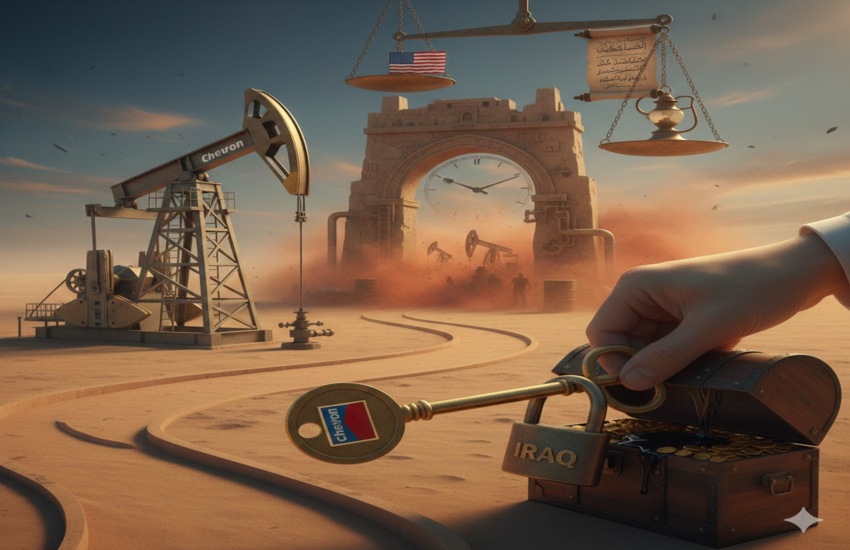
Chevron (NYSE:CVX) just slid into the driver’s seat for one of Iraq’s crown-jewel oil assets. The company signed preliminary agreements with state-owned Basra Oil to enter exclusive talks over taking over Lukoil’s stake in the West Qurna 2 field, a roughly 480,000-barrel-a-day giant. Iraq’s cabinet said Chevron gets 12 months of exclusivity, which is basically a “one-at-a-time” lane for negotiations. But it isn’t a done deal. The process hinges on approvals from U.S. Treasury and the Iraqi government, which turns this into a policy-heavy transaction, not just a corporate one. The backdrop matters, too. Lukoil has been under U.S. sanctions, and Washington has signaled it prefers U.S. buyers for Russian overseas assets. Zooming out, this looks like Chevron leaning harder into the Middle East as it works to rebuild reserves and keep production growth alive into the next decade.
Exclusive Talks & Deal Mechanics
Exclusive talks sound simple, but they matter a lot in a field this big. Chevron’s preliminary agreements cover two practical things: a framework to negotiate terms and the ability to exchange confidential data with Basra Oil. That second part is the quiet engine of the deal. Large oilfields come with complex cost recovery rules, operating constraints, and legacy issues. You cannot price those risks from headlines. Exclusivity gives Chevron time to dig into the real operating picture without being outbid every week. It also signals that Iraq wants to funnel the process through one lead negotiator, rather than run an open auction with constant political noise.
The “12 months” detail also tells you this will be a marathon. West Qurna 2 is not a small asset you plug into a portfolio in a quarter. Terms need to work for Iraq and for Chevron’s shareholders, and Chevron said so directly. That usually means negotiating the economic split, cost recovery mechanics, operator control, investment commitments, and timelines. It also means negotiating what happens to the current operating structure once Lukoil exits. Iraq had discussed shifting operations to Basra Oil, and this framework fits that reality. In plain English: Chevron is getting a long look in the engine room before it agrees to buy the car.
Sanctions, Approvals & Geopolitics
This deal sits at the intersection of oil and policy, which is why the approvals are not a footnote. Chevron’s arrangement depends on the U.S. Treasury and the Iraqi government signing off. U.S. Treasury matters because sanctions can restrict transactions, counterparties, banking, and even technical cooperation. If a sanctioned party is involved, the structure must avoid prohibited flows of money, services, or benefits. That is true even if the end goal is a sanctioned firm exiting. In practice, approvals shape the timeline, the legal structure, and who can touch what data. For a public company, that also shapes disclosure and risk language.
Iraq’s approval is just as pivotal, but for different reasons. West Qurna 2 is a strategic national asset, and Iraq’s government needs to be comfortable with the buyer, the operator model, and the investment plan. Iraq also has a geopolitical lens here. Officials have indicated they prefer U.S. majors in part because it may reduce exposure to future regional shocks involving Iran, Israel, and the U.S. They have also voiced frustration with the pace of some Russian and Chinese operators. That context makes the “exclusive” choice feel less like pure economics and more like national positioning.
The broader theme is bigger than one field. U.S. sanctions and U.S. policy preferences are pushing Russian overseas energy assets toward new owners, often Western ones. Lukoil agreed to a non-binding, non-exclusive process with Carlyle for much of its international portfolio, which shows how fluid the asset shuffle is. In that kind of environment, government views can decide winners. Chevron’s move looks aligned with that policy current. But it also means the deal lives on a political calendar, not just a corporate one.
Competitive Landscape For West Qurna 2
West Qurna 2 has not been lacking in interest, and that is part of why exclusivity is valuable. The field had drawn attention from other major players, including Exxon Mobil, because scale matters in upstream oil. A roughly 480,000-barrel-a-day asset can move the needle in reserves and production, especially when many legacy basins are mature. But competition in Iraq is not only about price. It is also about who Iraq trusts to invest, operate, and expand output in a way that fits national priorities.
Chevron’s positioning here also reflects timing. Lukoil’s status shifted after U.S. sanctions, which effectively forced asset sales and narrowed the viable buyer pool. Iraq also approved a settlement process that would have moved operations to Basra Oil, which could have changed the negotiating leverage for any outside buyer. Against that backdrop, Chevron stepping into exclusive talks suggests Iraq is picking a preferred path: keep progress moving while aligning ownership with Western, and specifically U.S., participation. That preference has been echoed by signals from Washington.
There is also the private equity angle. Carlyle’s January agreement with Lukoil was described as non-binding and non-exclusive, which leaves room for carve-outs, parallel negotiations, and re-trading. West Qurna 2 is exactly the kind of “special case” asset that governments want handled carefully. It involves a major producing field, a sensitive transition from a sanctioned operator, and a host country with strong views on control. Chevron’s exclusivity does not eliminate competition forever, but it blocks rivals from formally negotiating in the near term. In deal terms, it turns an open field into a one-on-one match, at least for now.
Chevron’s Reserve-Rebuild Strategy & What’s Next
Chevron has been explicit lately about what it wants: more durable production, more reserves, and more cash flow resiliency. In its latest earnings call, management framed 2025 as a “year of execution,” with record production and project start-ups across major hubs. They highlighted progress at Tengiz, ramp-ups in the Gulf of America, and a shift in the Permian toward free cash flow rather than volume growth. They also pointed to portfolio strengthening from the Hess acquisition. Put that together, and you get a company that is trying to extend its runway without taking on wild execution risk.
Iraq fits this strategy in a specific way. The Middle East holds huge, long-life resource potential, but Chevron has said it was intentionally underweight in the region for years because fiscal terms were often not competitive. Management also said that is changing, with more inbound interest from resource-rich countries and improved terms becoming more common. That’s important context for West Qurna 2. A big Iraqi field can offer long-duration barrels, which can help reserve life and production visibility. But it only works if contract economics and governance are acceptable.
The other clue is Chevron’s recent cadence in the region. The company signed an agreement for the Nasiriyah project in southern Iraq, and it has been talking up growth platforms like the Eastern Mediterranean gas business. The West Qurna 2 pursuit looks like another step in that direction, but with higher geopolitical complexity. What comes next is likely a long negotiation on terms, operator roles, and investment plans. Chevron will also need to manage the approval path with U.S. Treasury and Iraqi authorities. If those gates clear, West Qurna 2 could become a meaningful marker that Chevron’s Middle East posture has shifted from “selective observer” to “active builder.”
Final Thoughts
Chevron moving into pole position for West Qurna 2 is a big signal, but it comes with real strings. The 12-month exclusivity gives Chevron time to test the asset, negotiate terms, and reduce bidding chaos. It also suggests Iraq wants a focused process, not a crowded auction. Still, exclusivity is not ownership. The required approvals from U.S. Treasury and Iraq’s government are the true hinge points, and they can shape deal structure and timing. Sanctions and U.S. policy preferences are clearly influencing who ends up owning Russian overseas assets, and this field looks like a live example of that shift.
For Chevron’s strategy, the move reads as part of a broader push to rebuild reserves and keep production growth viable into the next decade, alongside recent project ramp-ups and major portfolio actions. The upside is clearer access to long-life barrels in a resource-rich region. The downside is heightened political, legal, and operating complexity. On valuation, the market is not treating Chevron like a bargain-basement cyclical right now. Using the figures you provided, Chevron trades around 2.18x LTM EV/revenue, 10.66x LTM EV/EBITDA, and about 27.89x LTM P/E. Those multiples suggest investors are paying up for stability and cash returns, which raises the bar for any big new deal to be clean, permitted, and economically durable.
Disclaimer: We do not hold any positions in the above stock(s). Read our full disclaimer here.