


Continue Reading With Our 7-Day Free Trial
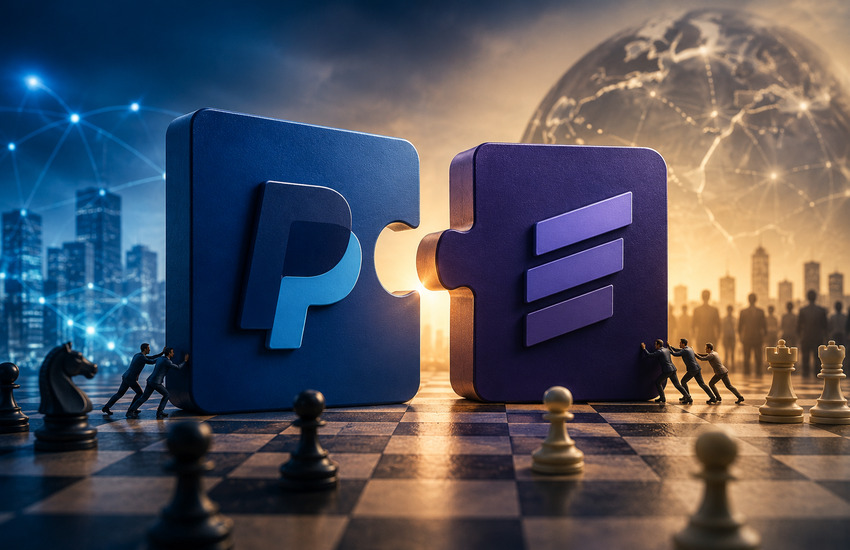
PayPal Holdings (NASDAQ:PYPL) is suddenly at the center of a takeover story that reaches far beyond Wall Street. The proposed Stripe PayPal acquisition could become one of the largest financial-technology transactions in recent years. Stripe and Advent International have reportedly offered $60.50 per share, valuing PayPal at more than $53 billion. That price represents a roughly 28% premium to PayPal’s previous closing price.
The proposal also appears financially serious. Banks have reportedly committed about $50 billion of financing, while Stripe and Advent would hold equal stakes. PayPal has not accepted the offer, and there is no certainty that a transaction will happen.
Still, the headline is hard to ignore. PayPal is not an obscure software company. It is one of the most recognized names in online payments. Millions of people have used its checkout button, stored money in Venmo, or sent payments through its platform.
The real question is simple: Does $53 billion fairly value PayPal, or does the offer capture its assets before its turnaround gains traction?
PayPal’s Consumer Network Is The Real Prize In The Stripe PayPal Acquisition
Stripe has built one of the world’s leading merchant payment platforms. Its tools help businesses accept payments, issue refunds, manage subscriptions, and automate financial processes. However, Stripe’s direct relationship with consumers remains limited.
PayPal fills that gap immediately.
The company has more than 430 million consumer accounts across its broader network. It also reported 225 million monthly active accounts during the first quarter. These figures measure different things, but both show significant consumer reach.
That network would give Stripe something difficult to build from scratch. PayPal already has trusted brands, stored payment credentials, risk data, and direct consumer relationships. Management described these assets as hard to replicate during its latest earnings call.
Venmo adds another layer of value. Its payment volume grew 14% during the quarter, marking six straight quarters of double-digit growth. Pay with Venmo grew 34%.
Stripe could connect these consumers with its merchant base. That could create a stronger link between online checkout, peer-to-peer payments, debit cards, lending, and digital wallets.
The bid is therefore not only about buying payment volume. It is about acquiring consumer trust and distribution at scale.
Stripe Gets Scale & A Direct Consumer Bridge
A combined Stripe and PayPal could process about $3.7 trillion in annual payment volume. That would create one of the largest online payment businesses in the world. This scale is a central part of the strategic case for the Stripe PayPal acquisition.
Scale matters because payment margins are often thin. Every improvement in routing, fraud control, authorization rates, or transaction costs can become meaningful across trillions of dollars.
Stripe serves merchants. PayPal serves merchants and consumers. Combining those networks could keep more transactions within one ecosystem.
A PayPal customer could pay a Stripe merchant without relying as heavily on outside processing layers. The combined platform could manage checkout, fraud screening, authorization, and settlement. Visa and Mastercard would remain important, especially for card-funded purchases. However, the merged company could gain more routing choices and negotiating power.
The deal would also expand cross-selling. Stripe could offer PayPal merchants its billing, tax, treasury, and automation products. PayPal could introduce its checkout button, Venmo, and credit products across more Stripe merchants.
Stablecoins add another strategic angle. PayPal said PYUSD had expanded into 70 markets. Stripe has also invested heavily in stablecoin infrastructure through Bridge.
Together, they could connect stablecoin technology with a large merchant network and a familiar consumer wallet.
PayPal’s Weak Spots Created The Opening
PayPal owns valuable assets, but its recent performance explains why a buyer approached now. The timing of the Stripe PayPal acquisition reflects the gap between PayPal’s strategic assets and its recent operating results.
Online branded checkout volume grew only 2% on a currency-neutral basis in the first quarter. Management expects slightly positive to low-single-digit growth for the full year. Europe remains soft, with pressure in the United Kingdom and slower growth in Germany.
PayPal also acknowledged years of technology underinvestment. CEO Enrique Lores said the company needs to become a technology company again. Its older structure created multiple handoffs, duplicated work, and slower decisions.
Those weaknesses matter because checkout remains PayPal’s most important business. Faster competitors have improved payment speed, merchant tools, and mobile experiences. Apple Pay and Google Pay have also gained consumer acceptance.
The financial results show similar pressure. Nontransaction operating expenses rose 8%, while non-GAAP operating income declined 5%. Management expects second-quarter adjusted earnings per share to fall about 9%.
This creates a familiar takeover setup. The assets remain strong, but public investors have lost patience with the execution.
Stripe may believe its technology culture can modernize PayPal faster. Advent may see room for tighter cost control and sharper capital allocation.
The timing could allow both buyers to acquire a global platform before those improvements appear in reported earnings.
Cash Flow & Cost Savings Strengthen PayPal’s Hand
PayPal’s board also has clear reasons to resist the current offer. Its cash generation could become an important issue in negotiations over the Stripe PayPal acquisition.
The company generated about $6.8 billion of adjusted free cash flow over the latest 12 months. It expects at least $6 billion for 2026. At a $53 billion equity value, the trailing figure implies a rough free-cash-flow yield near 13%.
That calculation is simplified, but it shows why the price may attract debate.
PayPal also finished the first quarter with $13.5 billion in cash and investments and $11.6 billion of debt. It repurchased $6 billion of shares during the previous 12 months.
The turnaround plan could improve those economics further. Management has identified at least $1.5 billion in gross annual run-rate savings over the next two to three years. The program includes fewer management layers, vendor reductions, automation, and wider AI adoption.
These savings support both sides of the deal.
PayPal can argue that shareholders should retain the benefits of lower costs and better execution. Advent can argue that the savings make the acquisition easier to finance.
Management also believes PayPal, Venmo, and Braintree have meaningful shared advantages. These include identity, risk management, technology, and merchant cross-selling.
That makes a breakup less obvious and could support a higher price for the whole company.
Final Thoughts
The Stripe PayPal acquisition proposal gives PayPal shareholders an immediate premium. It also offers a possible solution to the company’s technology and execution challenges. However, the reported $60.50-per-share offer may not fully settle the valuation debate.
As of July 14, 2026, PayPal traded at 1.31 times LTM enterprise value to revenue and 1.24 times LTM price to sales. It also traded at 6.71 times LTM EBITDA, 7.19 times LTM EBIT, and 8.87 times diluted earnings. Its LTM enterprise value to gross profit multiple stood at 3.19 times.
Those multiples are well below PayPal’s levels one year earlier. In June 2025, its LTM enterprise value to revenue multiple was 2.33 times, while its EBITDA multiple was 11.68 times.
The lower valuation reflects real concerns. Branded checkout is growing slowly, margins face pressure, and the technology overhaul carries execution risk. Yet PayPal still generates substantial cash and owns a rare consumer payments network.
The current offer includes a meaningful premium, but the trading multiples suggest the buyers are approaching PayPal during a period of unusually low market expectations. Whether that discount is justified will depend on PayPal’s ability to turn its assets into faster, more profitable growth.
Disclaimer: We do not hold any positions in the above stock(s). Read our full disclaimer here.