


Continue Reading With Our 7-Day Free Trial
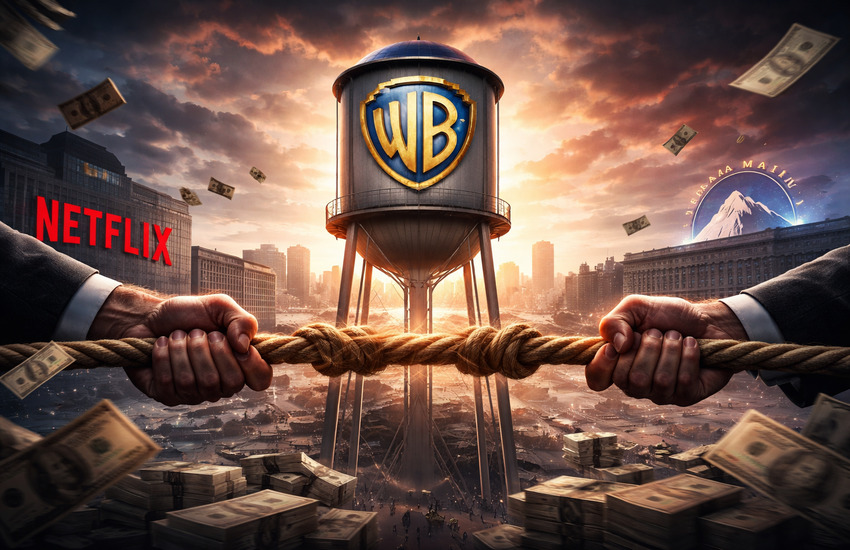
The battle for Warner Bros. Discovery (NASDAQ:WBD) just escalated. Despite Paramount’s $30 all-cash hostile bid, WBD’s board is preparing to recommend shareholders reject it and back Netflix’s lower $27.75/share cash-and-stock offer. The reason? Structure, speed, and strategy—not just price. Netflix is only acquiring the studios and streaming assets, leaving behind legacy cable, while Paramount is attempting a full buyout. Now, with Paramount going directly to shareholders and Netflix facing antitrust headwinds, the deal’s outcome is anything but certain.
This WBD contested takeover is no longer just a valuation story—it’s a referendum on M&A complexity in the streaming era. As both bidders meet with top shareholders and regulators begin circling, investors are weighing the risk of WBD bid rejection against the upside of a clean exit. The $100B+ size and political backdrop of this deal underscore its significance—not just for WBD, but for the future of entertainment.
The Board Can Say No — & That Changes Everything
At $30 per share, Paramount’s bid tops Netflix’s by nearly 8%. But if you’re assuming this is just a game of price tags, think again. The WBD board has already signaled it prefers Netflix, even if the number’s a little lower. Why? Simplicity, strategy, and certainty.
The Netflix proposal is a partial acquisition—studios and streaming only—leaving the declining linear TV networks (CNN, TNT, etc.) out of the mix. That’s not a bug, it’s a feature. Netflix is cherry-picking the growth engines and leaving WBD’s legacy businesses to be spun off. That aligns more closely with where the board believes the future value lies: in direct-to-consumer, not cable bundles.
Plus, WBD has real concerns about Paramount’s financing. The Paramount offer leans heavily on Larry Ellison’s backstop and no longer includes Affinity Partners. That’s not nothing. The board could view this as a red flag for execution risk—especially given the size of the deal and the debt required to close it.
And make no mistake: boards are not legally required to take the highest price. They must evaluate the “highest reasonably attainable value,” which includes speed to close, financing certainty, and alignment with long-term strategy. If Paramount can’t check those boxes, WBD’s board could reject the offer—and that would reshape the entire M&A chessboard.
Antitrust Is The Real Price Of Admission
There’s a growing buzz around the return of $100B media mergers. But this time, it comes with a big asterisk: antitrust.
The WBD contested takeover is unfolding under a second Trump administration, which has already signaled unease with a Netflix-WBD combination. President Trump has gone on record saying he wants any buyer to also acquire CNN—something only Paramount has agreed to do. That detail may seem small, but in the regulatory arena, it could be everything.
Netflix, now valued north of $400B, is already a dominant force in global streaming. Adding HBO Max and Warner’s IP-rich content library would deepen its market power. Regulators are almost certain to scrutinize this deal under vertical and horizontal merger frameworks—especially given Netflix’s move into live programming, gaming, and global production. DOJ involvement is a near certainty.
Paramount, while less dominant, faces its own challenges. Its financing structure and potential post-deal debt load could slow approvals. Also, with Jared Kushner’s Affinity now exiting the deal, political backing may be less robust than initially believed.
For merger arb funds and long-only investors, $100B media merger antitrust scrutiny isn’t just noise—it’s the real risk premium. A deal that clears in six months is worth more than one that grinds through 18 months of regulatory limbo. In a world of event-driven investing, the longer timeline alone changes how these bids are valued.
Structure Matters More Than Headline Price
In M&A, it’s not just what you pay—it’s what you buy and how you pay for it. And here’s where the Netflix and Paramount bids for WBD diverge sharply.
Netflix is targeting Warner Bros.’ crown jewels: the studios and HBO Max. This is a carveout, not a full takeover. By excluding the legacy linear assets, Netflix is shielding itself from cable’s decline while keeping optionality around theatrical releases and licensing. It’s a strategic asset match—and it gives Netflix flexibility to drive engagement, boost ads, and scale globally with premium IP like DC and Game of Thrones.
Paramount, on the other hand, wants it all—warts and all. Their full-company bid at $30 per share includes the cable assets, which carry significant revenue but are in secular decline. That may look cleaner on paper, but it’s riskier in execution. Integration complexity is real. Financing complexity is worse. And strategic synergy? Arguably weaker, especially given Paramount’s existing studio overlaps.
The WBD bid rejection risk isn’t just about dollars. It’s about structure, vision, and how the assets will be monetized post-close. Boards aren’t blind to this. Investors shouldn’t be either.
Time Is Now A Trading Variable
In the WBD contested takeover, time is money. And not just because faster deals unlock capital sooner—but because timing is part of the value equation now.
Since deal rumors surfaced in September, WBD shares have surged near the $30 mark, pricing in a likely acquisition. That’s brought in a wave of merger arbitrage funds—investors who profit from the spread between current share price and deal close value. For them, regulatory timelines aren’t just annoying—they’re alpha killers.
Netflix’s deal, though potentially cleaner from a strategic fit, is expected to face more scrutiny and a longer road through the DOJ. Paramount, while potentially faster due to political backing, still carries financing and execution risks that could delay things.
WBD’s shareholder base has shifted. Long-term holders who’ve already made their money are more willing to tender if the deal happens fast. For newer holders, especially arb-focused funds, every month of delay compresses IRR. This is why speed to close has become a critical valuation metric.
In the modern M&A landscape, time is no longer a passive variable. It’s actively shaping who wins, who tenders, and what premium they’re willing to accept.
Final Thoughts: Valuation Is Rising, But So Is the Risk
The WBD contested takeover marks a turning point—not just for Warner Bros. Discovery, but for big-ticket M&A in media. Competing Netflix and Paramount bids show that $100B mega-deals are officially back. But this isn’t 2016. It’s a new era of $100B media merger antitrust scrutiny, hostile bids, and valuation complexity.
At $28.90, WBD trades just below Paramount’s offer, suggesting markets believe a sweetened bid—or at least a deal—is coming. Yet risks remain. The board could reject Paramount’s offer. Netflix’s deal may face prolonged regulatory review. And either path brings execution uncertainty.
Valuation-wise, WBD’s latest LTM enterprise value to EBITDA sits at 13.2x—up from 8.3x six months ago. Price-to-sales has more than tripled from 0.5x to 1.89x in the same window. Clearly, acquisition hopes are baked in. But with levered FCF yield falling to just 5.2% and earnings volatility still high, the upside may be narrowing.
Bottom line? The price tag may be high, but the variables that determine real value—timing, structure, and regulatory risk—have never mattered more.
Disclaimer: We do not hold any positions in the above stock(s). Read our full disclaimer here.