


Continue Reading With Our 7-Day Free Trial
Nike, Inc. (NYSE:NKE) reports fiscal Q4 earnings after the close on Tuesday, June 30, and this is not a normal quarter. The stock is near a 52-week low at around $40.85. It is down roughly 36% year-to-date and more than 50% from its 2021 highs. Traders are reportedly pricing a move of up to about 8% in either direction.
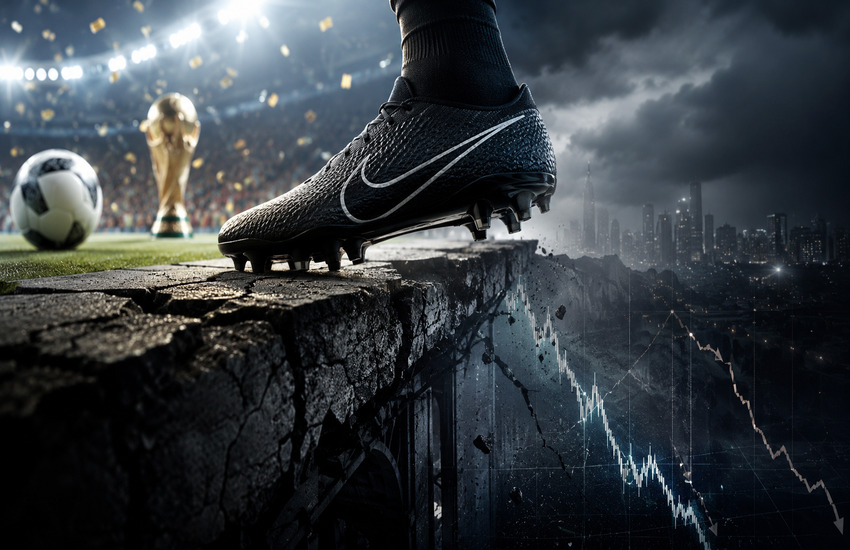
The easy story is World Cup buzz. Nike appears to be winning in parts of the soccer merchandise battle. Its U.S. World Cup sell-through has looked stronger than Adidas in some data. Nike is also selling World Cup shirts and jerseys at higher average prices.
But that may not be the real story.
The real question is simpler and more important. Is Nike finally becoming a turnaround stock, or is the World Cup just covering up deeper problems?
That answer may not come from one headline number. It may come from China, wholesale, margins, and whether Elliott Hill’s reset is actually working.
The Priced-In Scenario
The market is already expecting a weak quarter.
Nike has guided for fiscal Q4 revenue to fall 2% to 4%. North America is expected to grow modestly, but that growth is likely to be offset by weakness in Greater China and Converse. Management also said Greater China could be down roughly 20% in Q4 because Nike is intentionally reducing sell-in and cleaning up the marketplace.
That means investors are not walking into this print expecting a clean comeback. Margins are also under pressure. Nike expects Q4 gross margin to fall by about 25 to 75 basis points. Higher tariffs in North America are expected to create a major drag.
So the setup is not about whether the quarter is ugly. Most investors already know it may be ugly.
The real issue is whether the ugly quarter looks temporary or structural.
That is where the narrative gets tricky. Nike still has one of the strongest brands in the world. It still has cultural power. It still has elite athletes. It still owns many of the biggest moments in sport. But the stock is not trading like a healthy global brand. It is trading like a company that still has to prove itself.
The Real Swing Factor
The most important thing to watch is sell-through quality.
That simply means this: is Nike selling the right products, at the right price, through the right channels?
This matters more than World Cup headlines. If sell-through improves, Nike can discount less. Inventory gets cleaner. Gross margins can recover. Wholesale partners get more confident. The stock can start to look like a real recovery story.
If sell-through stays weak, the opposite happens. Nike may have to keep promoting. Margins stay under pressure. Retail partners get cautious. Investors keep treating the stock like a broken growth story.
Management has already admitted the problem. Digital is still too promotional. Markdowns are still elevated. Sportswear is still weak. EMEA remains challenging. China is still being cleaned up.
That is why this earnings report is bigger than one quarter. Nike does not just need sales. It needs better-quality sales. That is also why the World Cup can be a trap. Selling jerseys during the biggest soccer event in the world is good. But it does not automatically fix Sportswear, China, DTC, or margins.
The Rotation Trade Has Not Found Nike Yet
There is another angle here, and it may be the most interesting one.
Money has been rotating out of crowded AI winners and into more traditional areas like industrials, healthcare, and materials. But that rotation has not really found Nike yet.
That says a lot.
Nike looks cheaper than it has in years. The brand is still famous. The stock is beaten down. On paper, it has the kind of setup value investors usually like. But investors have not rushed in because Nike still has real problems.
China remains under pressure from both local competition and weaker brand momentum. Names like Li Ning and Anta have become harder to ignore. Nike’s DTC strategy also created issues. The company leaned too far into direct channels and is now rebuilding wholesale relationships.
Tariffs are another issue. Nike has exposure to manufacturing in places like Vietnam and Indonesia. That makes margin recovery harder when trade costs rise. So yes, Nike may look like a value trade. But the market wants proof first.
This earnings report decides whether Nike is a fallen giant recovery story or just another cheap stock with falling earnings.
The Upside Surprise Setup
The upside case is not about Nike reporting a perfect quarter. That is not the bar. The upside case is that Nike shows enough signs of stabilization. Investors want to see that the business is getting healthier, even if growth is still weak.
North America is the first place to watch. In Q3, North America revenue grew 3%, and wholesale grew 11%. Management also said North America saw positive growth across all channels for the first time in two years. That matters because wholesale is central to the reset.
Nike’s old strategy leaned too heavily on Direct. The new strategy is more balanced. Nike wants to meet shoppers wherever they are. That includes Nike stores, Nike.com, Foot Locker, Dick’s, JD, running specialty stores, and other partners.
If wholesale keeps improving, the market may start to believe Elliott Hill is repairing the damage from the prior strategy. The World Cup can help the mood too. Nike’s U.S. World Cup merchandise sell-through looked strong in the article you shared. Nike also appeared to be selling at higher average prices than Adidas.
That tells us something useful.
Consumers still show up for Nike when the product and the moment are right.
If Q4 shows better sell-through, less discounting, stronger wholesale, and some China stabilization, the story can shift quickly. Not because Nike is fixed. But because investors may believe the bottoming process has started.
The Downside Surprise Risk
The downside case is just as simple. World Cup buzz may not matter enough. Nike could still sell soccer gear well and disappoint investors. That is because World Cup revenue is likely small compared with Nike’s total business.
The larger business still has pressure points.
Sportswear is one of the biggest. Management said Sportswear declined low double digits in Q3. That is a problem because Sportswear is a major part of Nike’s business. Performance categories like Running and Football can improve, but Nike still needs lifestyle demand to recover.
China is another major risk. Nike expects Greater China to fall about 20% in Q4. Some of that is intentional. The company is cutting sell-in to clean up inventory and protect full-price demand. But investors may still punish the stock if China looks worse than expected.
There is also a competitive twist. The first article showed Nike beating Adidas in certain U.S. World Cup merchandise data. But Reuters also reported Adidas is getting a stronger World Cup sales boost than Nike in several areas. That makes the story more balanced.
Nike may be winning one part of the World Cup battle. Adidas may be winning other parts. The risk is that Nike wins the jersey headline but loses the broader momentum story. That would be a bad setup for a stock already near lows.
What Actually Matters After The Print
After the earnings release, investors should not only look at revenue. The better question is: does the business look cleaner?
That starts with inventory. Nike has been removing unhealthy inventory from the marketplace. That hurt results in the short term, but management says it is needed for long-term health. If inventory looks cleaner, that is a good sign.
Then comes gross margin. Nike has said Q1 fiscal 2027 should be the final quarter where tariffs are still a major year-over-year margin headwind, assuming no big changes. Management also expects gross margin expansion to begin in Q2 fiscal 2027.
That is a key time marker. If investors believe margins can start improving later this year, they may look past a weak Q4. If they do not believe it, the stock can stay stuck. The next thing to watch is product heat outside the World Cup. Running was up more than 20% in Q3. Nike also highlighted Football, Basketball, Training, Nike Mind, and Aero-FIT.
That matters because Nike needs more than one hot event.
Nike needs repeatable product energy.
The final signal is leadership. Elliott Hill came in after John Donahoe, and this print is part of the market’s first real judgment of that transition. Investors want to know if the new CEO is changing the direction of the company or just describing the same problems in a better way.
Final Thoughts
Nike’s earnings setup is very simple on the surface and very complicated underneath.
The stock is near a 52-week low. The brand is still huge. World Cup merchandise gives bulls something to talk about. The valuation has come down a lot.
But the business is still under repair.
Nike’s LTM valuation multiples now sit at 1.36x EV/Revenue, 1.30x Price/Sales, 18.14x EV/EBITDA, 22.61x EV/EBIT, and 26.87x P/E as of June 26. That is cheaper than where Nike traded earlier in the year. But it is not automatically cheap if profits keep falling.
That is the whole earnings pre-mortem.
Nike does not need to prove everything is fixed on Tuesday. It does need to prove the cleanup is working. The market will likely care less about World Cup noise and more about sell-through, China, wholesale, margins, and the path into the next two quarters.
Nike’s World Cup win may be real. The earnings question is whether it signals a comeback — or just a temporary sugar rush.
Disclaimer: We do not hold any positions in the above stock(s). Read our full disclaimer here.