


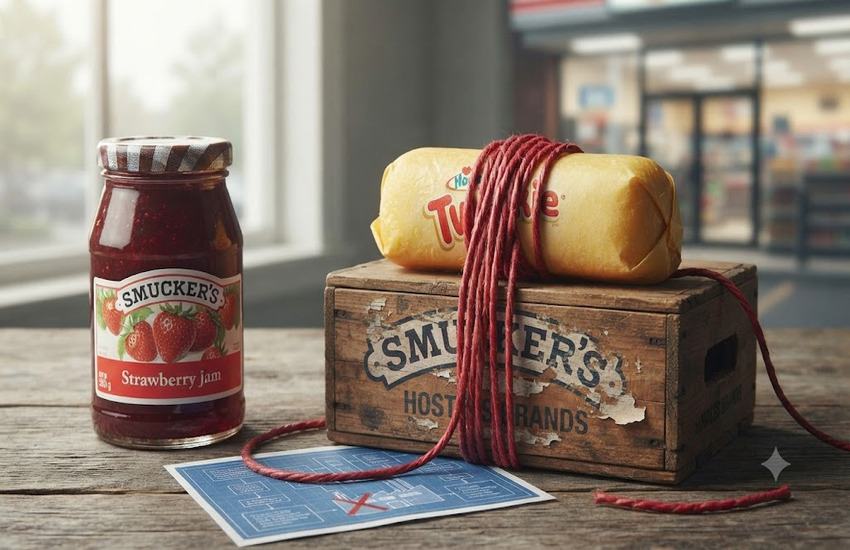
The J. M. Smucker Company (NYSE:SJM) thought it had found a sweet new growth engine when it bought Hostess. The Smucker Hostess deal gave the company famous snack brands like Twinkies, Ding Dongs, Donettes, and CupCakes. At the time, the logic looked simple. Americans were snacking more, and Hostess gave Smucker instant access to a huge snack market.
But the story has changed. Hostess has not delivered the growth investors expected. Sales in sweet baked snacks have been weak. Smucker has taken large impairment charges tied to the deal. Elliott Investment Management has also entered the picture with board influence.
The twist is that this is not just a story about Twinkies losing popularity. It is also about execution, shelf life, convenience stores, cost cuts, and changing American eating habits. Smucker is now trying to turn Hostess from a growth story into a repair story.
Smucker Hostess Deal Became A Bigger Problem Than Expected
When Smucker bought Hostess, the company was not just buying snack cakes. It was buying nostalgia. Twinkies and Donettes are familiar to almost every American. That made the deal easy to understand and easy to sell.
But nostalgia does not guarantee growth. Hostess sales have disappointed since the acquisition. The sweet baked snacks division has posted several quarters of pressure. Smucker has also taken nearly $3 billion in impairment charges tied to Hostess.
That is a big signal. It means the value of the business was marked down after the acquisition. Investors noticed.
The deal also attracted activist pressure. Elliott Investment Management became one of Smucker’s larger shareholders and received two board seats through an agreement with the company.
That matters because it changes the tone of the story. This is no longer just a weak product cycle. It has become a capital allocation debate. Did Smucker overpay? Can management fix the business? And will Hostess ever justify the price tag?
America’s Snack Mood Is Changing Fast
Hostess is also fighting a tough market. Consumers are more careful with spending. Snack cakes are easy to skip when grocery bills feel high.
There is also a bigger health shift happening. GLP-1 weight-loss drugs, protein-focused diets, and anti-ultra-processed food trends are changing the way people think about snacks. A Twinkie may still be fun, but it is not exactly aligned with today’s wellness mood.
That does not mean people have stopped treating themselves. They have not. But many consumers now want smaller portions, better value, or snacks that feel less guilty.
Smucker seems aware of this. The company has pushed mini versions, $1 packs, refreshed packaging, and products tied to specific occasions. It has also brought back Suzy Q’s and launched Fritter Rings.
Still, the challenge is clear. Hostess was built on indulgence. The market is now asking for a more careful version of indulgence.
That makes the turnaround harder. Smucker is not just fixing operations. It is also trying to make old-school snack cakes feel relevant again.
Twinkies Do Not Behave Like Jam & Coffee
One of the biggest lessons from the Hostess deal is simple: snack cakes are not jam, coffee, or peanut butter.
Many Smucker products can sit on shelves for a long time. Fruit spreads, coffee, and pet food have much longer shelf lives. Hostess products move faster. Even Twinkies, with their famous shelf life, need quicker handling.
That creates pressure across the business. Production, shipping, warehouse timing, and store replenishment all matter more. A delay can quickly become a missed sale.
Hostess also had a different sales model. A large part of its business came from convenience stores. That is a different world from supermarket center aisles.
Convenience stores depend on impulse buying, displays, and fast restocking. Smucker had to manage that while folding Hostess into its own systems.
That integration appears to have caused problems. Forecasting became harder. Some shelf space and display opportunities were lost. Innovation also slowed.
This is the hidden part of the Twinkie story. The problem was not just demand. Smucker bought a business that moved at a different speed.
Donettes & Cost Cuts Are Now The Turnaround Plan
The latest earnings call gave investors a clearer view of Smucker’s repair plan. Management is no longer talking about Hostess as a quick growth machine. The focus is now stabilizing the business and improving profitability.
That is a very different message. It sounds less exciting, but it is more realistic.
There are some bright spots. Donettes grew 13% and now represent about 40% of the Hostess portfolio. That gives Smucker a strong product to build around, especially in breakfast snacking.
The company is also simplifying the business. It has reduced products through SKU rationalization. It completed manufacturing footprint consolidation. It also closed an Indianapolis plant, which is expected to save about $30 million annually.
CFO Tucker Marshall said Sweet Baked Snacks profit is expected to grow sharply in fiscal 2027. The improvement is expected to come from better costs, bakery execution, trade discipline, and selected price increases.
So the plan is not complicated. Smucker wants fewer distractions, stronger execution, and better margins. Sales growth may take time. Profit repair comes first.
Final Thoughts
Smucker’s Hostess acquisition has become a clear reminder that famous brands do not always make easy deals. Twinkies gave the company a powerful name. But they also brought a faster supply chain, a weaker snack category, convenience-store complexity, and a consumer base that is changing.
The balanced view is that Hostess has clearly underperformed. The write-downs, sales pressure, and Elliott involvement show that investors have real concerns. At the same time, Smucker is not standing still. Donettes are growing, costs are being cut, and the company is trying to rebuild the business around fewer and stronger products.
Valuation also shows a mixed picture. Smucker recently traded at about 2.12x LTM revenue, 9.96x LTM EBITDA, 14.01x LTM EBIT, and 1.34x LTM price-to-sales. The LTM P/E is not very useful because impairment charges distorted reported earnings.
That valuation does not suggest a high-growth story. It suggests a mature consumer staples company with cash flow, dividends, debt reduction, and one very visible deal problem. For now, the market appears to be treating Smucker as a company that must prove Hostess can become stable before it can be called successful.
Disclaimer: We do not hold any positions in the above stock(s). Read our full disclaimer here.