


Apple Inc. (NASDAQ:AAPL) is reportedly preparing for a major smart-home push on October 13, and the implications could extend well beyond new gadgets. According to Reuters, the company plans to introduce an AI-powered home hub alongside refreshed versions of the HomePod mini and Apple TV. The hub will reportedly feature a six-inch display and use artificial intelligence to recognize household members and deliver personalized responses. Apple is also reportedly collaborating with LG on smart locks, cameras, doorbells, thermostats, and other connected devices. Together, these products could mark a significant expansion of Apple’s existing HomeKit platform and the broader Apple AI Ecosystem. The timing is particularly interesting because Apple’s new Siri AI is moving closer to widespread adoption. The bigger question is whether Apple can replicate its success with the iPhone, Apple Watch, and AirPods by turning fragmented smart-home products into one connected ecosystem. With more than 2.5 billion active devices and a growing services business, Apple already has an established foundation. Let’s examine four factors that could determine whether this expansion becomes financially meaningful.
Siri AI Could Become The Center Of The Apple AI Ecosystem
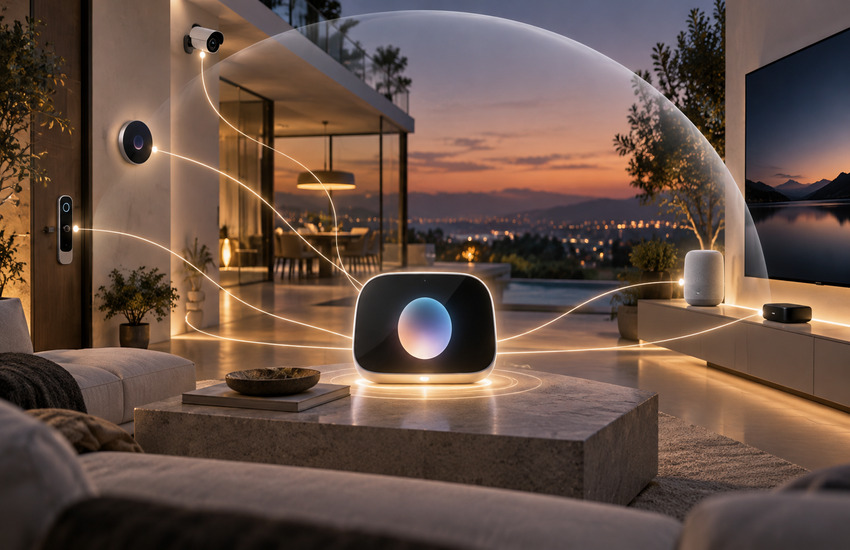
Apple’s upcoming smart-home hub is reportedly designed to make Siri AI a central part of everyday household activities. Bloomberg reports that the device, internally code-named J490, will feature a six-inch square display. Users could place it on a countertop or mount it on a wall. Its AI capabilities are expected to recognize individual household members and personalize interactions. An updated HomePod mini and Apple TV could extend those capabilities across different rooms.
The opportunity goes beyond responding to voice commands. A more capable Siri could potentially coordinate lighting, temperature, security devices, and entertainment through natural language. That would make Apple’s AI useful throughout the home rather than primarily on personal devices, strengthening the Apple AI Ecosystem.
During Apple’s July earnings call, management highlighted the positive early response to Siri AI’s developer and public betas. Tim Cook emphasized personal context, privacy, and integration across Apple’s operating systems.
Apple’s hybrid AI architecture also matters. Some requests can run directly on devices, while more demanding tasks use cloud infrastructure. This approach could help limit the amount of sensitive household information sent to remote servers.
However, reliability will be the determining factor. A household assistant must consistently execute commands, recognize users correctly, and coordinate devices from different manufacturers. The October 13 introduction could provide an early indication of Apple’s progress toward that goal.
Apple’s Ecosystem Is Expanding Monetization Remains The Deciding Test
Apple’s reported October 13 smart-home launch extends its AI strategy into the household. Its existing device base offers a distribution advantage, but investors must assess whether adoption translates into sustainable financial returns. At elevated valuation multiples, execution remains central to the investment case.
BULL CASE
Apple’s 2.5 billion-plus active devices create opportunities for hardware cross-selling, deeper household engagement, and potentially stronger recurring services revenue.
KEY RISK
Unproven adoption and Siri reliability could limit financial returns, particularly with Apple’s elevated valuation already reflecting substantial expectations for growth.
WATCH NEXT
Watch the October 13 announcement for demonstrated Siri reliability, accessory compatibility, product pricing, and evidence supporting future household adoption.
Apple’s smart-home expansion offers another path to deepen its ecosystem, but its financial contribution remains uncertain. Sustainable adoption and profitable monetization must support future earnings growth before the opportunity can meaningfully strengthen the valuation case.
Apple’s Massive Installed Base Could Drive Hardware Cross-Selling & Customer Retention
Apple enters this expansion with a substantial distribution advantage. During its fiscal third-quarter earnings call, CFO Kevan Parekh disclosed an installed base exceeding 2.5 billion active devices. That includes products across Apple’s existing hardware categories.
This established ecosystem could make smart-home adoption easier. Existing iPhone owners already have access to Apple’s Home app, while HomePod and Apple TV can serve as home hubs. Introducing a dedicated AI-powered controller could encourage customers to add more connected accessories, expanding the Apple AI Ecosystem into everyday household activities.
Apple is reportedly working with LG on video doorbells, security cameras, smart locks, thermostats, and temperature sensors. Bloomberg reports that these products will carry LG branding, with LG handling manufacturing and support. This arrangement could expand Apple’s compatible hardware portfolio without requiring it to manufacture every accessory.
Compatibility will also play an important role. Support for standards such as Matter and Thread could help consumers connect products from multiple manufacturers.
For Apple, the longer-term benefit could be stronger household-level customer retention. Families using several connected Apple products may find the ecosystem increasingly convenient.
However, this strategy also depends on competitive pricing, reliable integrations, and broad accessory availability. Open standards may improve adoption, but they also make switching between competing platforms easier.
Smart-Home Expansion Could Create New Opportunities For Apple’s High-Margin Services Business
Apple’s services business provides another reason to examine the upcoming launch. In fiscal Q3 2026, Services revenue reached $30.7 billion, increasing 12% year-over-year. The segment generated a 75.6% gross margin, compared with 40.1% for Products.
Those economics make additional service subscriptions particularly relevant. Apple already offers HomeKit Secure Video through iCloud+, allowing compatible security cameras to store encrypted recordings. Plans supporting multiple cameras could become more useful as households expand their connected-home setups.
Apple also reported more than 1.5 billion paid subscriptions across its services platform. That provides an established subscription business through which new offerings could be distributed.
During the July earnings call, Tim Cook discussed potential premium iCloud+ upgrades for customers who use Siri AI extensively. Management also acknowledged that the balance between AI computing expenses and subscription monetization remains uncertain.
A household using AI-powered cameras, personalized assistants, and connected security devices could eventually require additional cloud services. This creates opportunities for higher subscription spending and improved customer retention within the Apple AI Ecosystem.
However, Apple has not announced smart-home-specific AI subscription pricing or revenue targets. Existing iCloud+ customers may also have sufficient storage and camera allowances.
The financial opportunity therefore depends on whether new functionality encourages meaningful paid upgrades rather than simply increasing usage of existing subscriptions.
Apple’s Privacy Positioning Faces A Major Competitive Test Against Amazon & Google
Apple is entering a market where established competitors already have extensive product offerings. Amazon operates the Alexa, Echo, and Ring ecosystems, while Alphabet’s Google offers Nest devices and Gemini-powered home capabilities. Both companies have invested in connected-home hardware, voice assistants, and security features.
Apple’s potential differentiation lies in combining privacy protections with tighter hardware and software integration. HomeKit Secure Video already provides encrypted recording and on-device video analysis. Apple’s broader AI strategy also emphasizes processing information locally when possible.
These features could become particularly relevant when devices manage household access, camera footage, and personal routines. Consumers may have different privacy expectations for a security camera than for a conventional smart speaker.
Apple’s collaboration with LG could also help it compete across more product categories. The reported lineup includes cameras, locks, doorbells, and climate-control devices. However, their commercial availability and pricing remain uncertain.
There are also financial considerations. Apple reported $7.9 billion in Wearables, Home and Accessories revenue during Q3, up 6% year-over-year. That segment includes several categories beyond smart-home products.
The main challenge is translating product integration into sustained adoption. Amazon and Google already have established customer relationships. Apple must demonstrate that its approach offers enough practical advantages to justify additional household spending and support the expansion of the Apple AI Ecosystem.
Final Thoughts
Apple’s reported October 13 launch could mark an important expansion of its AI strategy into connected homes. The company has several existing advantages, including a large installed device base, established software platforms, and a profitable services business. The Apple AI Ecosystem could become more deeply integrated into consumers’ daily routines through connected-home devices. However, the commercial opportunity remains difficult to quantify. Apple must demonstrate reliable Siri AI capabilities, competitive hardware pricing, and meaningful subscription attachment before investors can assess the financial contribution.
Valuation also deserves attention. As of October 7, 2026, Apple’s LTM P/E stood at 38.62x, compared with 34.40x on June 27. Its LTM EV/EBITDA increased to 28.88x, while its LTM EV/Revenue reached 10.39x. The stock also traded at 10.53x trailing sales. Forward valuations remained elevated, with an NTM P/E of 36.58x and NTM EV/EBITDA of 27.87x.
These multiples suggest investors already assign considerable value to Apple’s growth prospects and ecosystem strength. The smart-home expansion could reinforce that investment narrative, but near-term financial contributions may remain modest. Ultimately, Apple’s ability to turn connected-home adoption into sustainable earnings and services growth will matter more than the number of products announced on October 13.
Disclaimer: We do not hold any positions in the above stock(s). Read our full disclaimer here.