


Continue Reading With Our 7-Day Free Trial
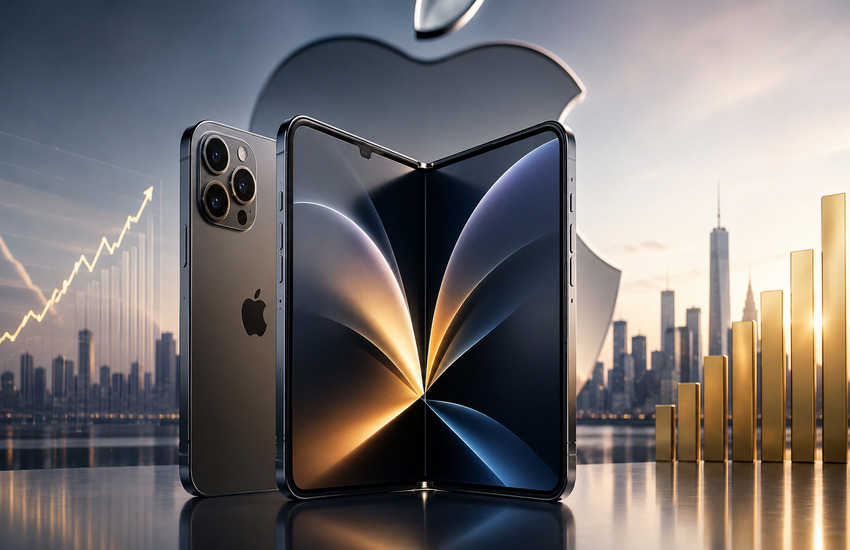
Apple (NASDAQ:AAPL) has officially set September 9 for its next major product event. The Apple Foldable iPhone is expected to be one of the biggest attractions. Normally, that would start another familiar debate about cameras, chips, and upgrade features. This year, the stakes are much bigger. The event comes just eight days after John Ternus takes over as CEO on September 1. Tim Cook will move to executive chairman. Apple is also expected to enter the foldable smartphone market for the first time. That could push the iPhone lineup much further into premium territory. Reuters reports that the event is expected to feature Apple’s first foldable iPhone alongside its next-generation phones.
The timing is fascinating from an investor’s perspective. Ternus inherits an iPhone business that is already growing strongly. Yet Apple faces rising component costs, tight supply, and a shrinking global smartphone market. September 9 may therefore tell us much more than what Apple’s next phone looks like. It could reveal how the Ternus era plans to protect growth and margins.
Ternus Faces An Unusually High Bar From Day One
John Ternus is not inheriting a turnaround story. He is taking control of Apple while several major parts of the business are performing near record levels. That makes his challenge quite different.
Apple generated $109.4 billion of revenue in its latest quarter, up 16% year over year. iPhone revenue jumped 22% to $54.3 billion. Apple also recorded its best June quarter ever for iPhone upgrades. The installed base has surpassed 2.5 billion active devices.
Cook’s final earnings call as CEO made the succession especially visible. Ternus joined the call, and Cook told investors that his successor would lead future earnings discussions. The September event will now become Ternus’s first major public product moment as CEO.
That matters because Ternus comes from Apple’s hardware organization. Investors will naturally connect the company’s next hardware decisions with its new leader. A foldable iPhone therefore carries more symbolism than an ordinary model refresh.
The comparison with Cook will also be difficult to escape. Cook spent 15 years building Apple into one of the world’s most valuable companies. Ternus now needs to preserve Apple’s operational discipline while finding new sources of growth.
September 9 will not define his tenure. Still, it will provide the first important glimpse of his priorities.
Apple Foldable iPhone Could Reset Apple’s Pricing Ceiling
Apple’s first foldable could matter less for unit volume than for what it does to the economics of each sale.
IDC expects foldables to be one of the few growth areas in an otherwise weak smartphone market. It forecasts foldable shipments rising 12.6% in 2026 to 22.9 million units. The category could reach roughly 27 million units in 2027.
Apple could quickly become a major part of that market. IDC expects the company to ship more than 17 million foldable iPhones by 2027. That would represent about 40% of global foldable shipments. IDC also estimates an average selling price above $2,550.
Those numbers explain why this launch matters financially. A device priced far above the traditional iPhone range could lift Apple’s average selling price without requiring enormous volume. The Apple Foldable iPhone could therefore influence mix before it becomes a mass-market product.
The rest of the fall lineup may reinforce that effect. The expected launch is unusually weighted toward expensive models. The standard iPhone 18 is reportedly moving to a later release window.
Apple has also introduced Apple Upgrade in the U.S. The leasing program makes new hardware available through recurring payments. Management said early customer feedback has been positive.
That could become useful for a very expensive foldable. Financing cannot eliminate the price, but it can change how consumers experience it.
Premiumization Matters More As Costs Keep Rising
Apple’s push toward expensive hardware is arriving at an unusually difficult moment for smartphone economics.
Memory costs have risen sharply across the industry. Cook told investors that Apple paid significantly more for memory during the June quarter. He expects those costs to rise further. He described the environment as a “100-year flood” in memory pricing and said Apple had reluctantly increased some product prices.
The effect is already visible in Apple’s margin outlook. Company gross margin reached 50.1% in the June quarter. However, that included roughly two percentage points of benefit from tariff refunds. Management guided September-quarter gross margin to 47%-48%, including another tariff-related benefit.
That makes product mix increasingly important.
Selling more premium devices could help Apple defend gross profit dollars even when component costs rise. The Apple Foldable iPhone would sit at the extreme end of that strategy.
The wider smartphone industry is moving in the same direction. IDC expects global smartphone shipments to fall a record 16.7% in 2026. Yet industry revenue could still rise because smartphone pricing is moving sharply higher. IDC expects average selling prices to increase 27.6% to $581.
In other words, manufacturers are losing volume but charging more. Apple may be unusually well positioned for that environment because premium pricing is already central to its business model.
Supply Constraints Could Delay The Financial Payoff
There is one major problem with the premiumization thesis: Apple cannot monetize devices it cannot ship.
Management already warned that supply constraints will increase significantly during the September quarter. Those constraints are expected to affect iPhone, Mac, and iPad. Apple identified advanced semiconductor nodes as the main bottleneck.
Cook made an important distinction on the earnings call. He said the issue was not mainly poor supplier execution. Demand for the current iPhone and Mac cycles had exceeded Apple’s own expectations.
That is encouraging from a demand perspective. It is less comforting when Apple is preparing another complex flagship device.
A foldable requires new components, manufacturing processes, and quality controls. Initial supply could therefore matter almost as much as consumer interest. If availability remains very limited, the ASP story may appear faster than the earnings story. That risk will be especially important for the Apple Foldable iPhone.
This creates an important timeline question for investors.
A successful September launch could prove that consumers will pay far more for a differentiated iPhone. However, limited production might keep the revenue contribution modest at first. The larger financial impact could then shift further into 2027 or 2028.
That tension makes September 9 more interesting. Apple needs to demonstrate demand, but eventually it must also prove that it can manufacture the device at scale.
Final Thoughts
Apple’s September event brings several important developments together at once. The company is changing CEOs, entering foldables, leaning toward premium hardware, and dealing with unusually high component costs. All of this is happening while global smartphone shipments are expected to contract sharply.
The operating backdrop remains strong. iPhone revenue recently grew 22%, upgrade activity hit a June-quarter record, and Apple’s installed base continues to expand. The Apple Foldable iPhone could add another lever by pushing average selling prices higher and opening a category that IDC still expects to grow.
The valuation, however, leaves investors with less room to ignore execution. As of August 26, Apple traded around 35.97x LTM diluted earnings, 29.14x LTM EV/EBIT, 26.87x LTM EV/EBITDA, and 9.80x LTM sales.
Those multiples already reflect substantial confidence in Apple’s earnings quality and long-term durability. A successful foldable could support that premium if it improves mix, margins, and upgrade activity. Limited supply or weaker demand could delay those benefits.
September 9 therefore matters for more than the next iPhone. It will offer the first real look at how Apple’s new leadership plans to extend the economics of the world’s most valuable hardware franchise.
Disclaimer: We do not hold any positions in the above stock(s). Read our full disclaimer here.