

Continue Reading With Our 7-Day Free Trial
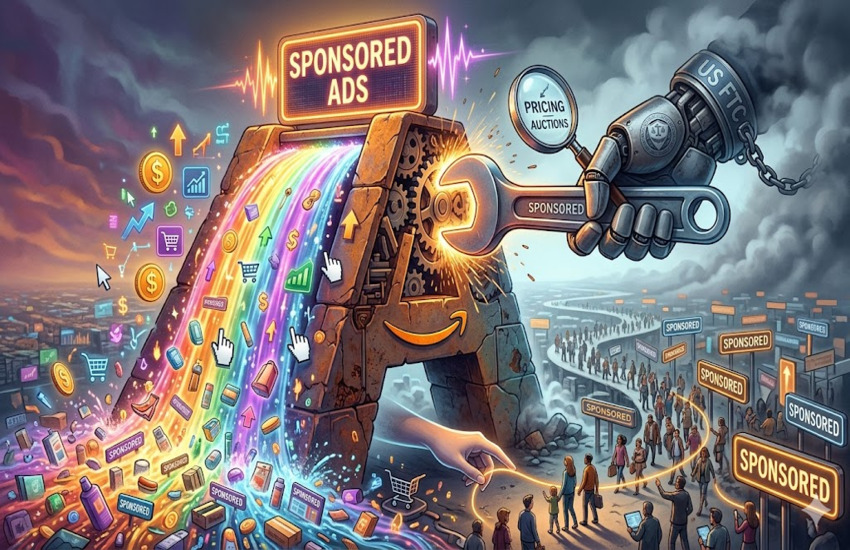
Amazon.com, Inc. (NASDAQ:AMZN) may have a new headache, and this one sits right inside something millions of shoppers see every day: sponsored ads. A reported FTC probe is looking at whether Amazon misled advertisers about parts of its advertising system, including how pricing terms were disclosed and how its ad auctions worked. The reported focus includes sponsored listings, sponsored products, and possible “reserve pricing,” which means minimum price levels advertisers may need to meet before buying ad placements.
That sounds technical at first. But the story is simple. Amazon’s ad business has become huge. It generated $68.6 billion in revenue last year, and in Q1 2026 alone, Amazon Ads produced $17.2 billion, up 22% year-over-year. So this is not just another legal headline. It is a test of one of Amazon’s fastest-growing money machines.
Sponsored Listings Are Now A Regulatory Flashpoint
The FTC probe reportedly focuses on Amazon’s advertising business, especially the sponsored listings and sponsored ads that show up in search results. These are the placements shoppers often see when they search for everyday items. To shoppers, they may look like part of the normal buying journey. To sellers and brands, they are paid placements that can shape visibility, clicks, and sales.
That is why disclosure matters. Regulators are reportedly examining whether Amazon clearly explained certain pricing terms and auction conditions to advertisers. One specific area is reserve pricing, which refers to minimum price thresholds in the ad auction. If advertisers were not properly told how those thresholds worked, the FTC could argue that they were misled about the true cost of reaching shoppers.
The issue is bigger because Amazon’s marketplace is crowded. Sellers often feel pressure to advertise just to be seen. A product can be good, priced well, and still get buried below sponsored results. That makes Amazon Ads feel less optional for many brands. It also makes the rules of the auction more important.
To be fair, no final complaint has been approved yet. The reported action would still need internal approval from FTC leadership. Amazon has also not been found liable in this matter. But the fact that regulators are looking at the plumbing behind sponsored ads is important. If the ad auction is questioned, the risk is not just a fine. It is trust.
Amazon Ads Is Still Growing Fast
The timing is sensitive because Amazon Ads is no longer a small side business. In Q1 2026, Amazon said its advertising revenue reached $17.2 billion, up 22% from the prior year. Management described strong growth across its full-funnel ad offerings, which means Amazon is trying to serve brands from awareness to purchase.
That growth explains why the FTC story matters. Amazon’s ad business has become one of the clearest ways the company monetizes its marketplace traffic. The company already has the shopper. It already knows what people search for, compare, and buy. That gives Amazon a powerful pitch to advertisers: spend money here because the customer is already close to buying.
Amazon is also expanding ads well beyond basic sponsored listings. On the earnings call, management highlighted partnerships with Netflix, Comcast Advertising, and Samsung TVs. Amazon also talked about using its shopping, browsing, and streaming signals to help advertisers reach audiences more effectively on Netflix.
That makes the regulatory issue more complex. This is not only about a seller bidding for a search result on Amazon.com. Amazon is building a wider ad ecosystem across retail, video, streaming, and connected TV. The more powerful that ecosystem becomes, the more scrutiny it may attract.
Still, strong growth gives Amazon a cushion. Advertisers continue to spend because Amazon can connect ads to purchase behavior. That is rare. The question is whether regulators force Amazon to change how it explains pricing, auctions, or sponsored placements.
AI Shopping Could Make The Stakes Bigger
The most interesting part of the story may be where Amazon Ads goes next. Amazon is pushing deeper into AI-powered shopping through Rufus, its shopping assistant. Management said Rufus monthly active users were up over 115%, while engagement rose nearly 400% year-over-year. That suggests shoppers are starting to use Amazon in a more conversational way.
Amazon has also introduced Sponsored Products and Brand Prompts in Rufus. These prompts help brands show products while customers ask questions inside the AI assistant. Management said nearly 20% of shoppers who interact with Brand Prompts in Rufus continue the conversation about that brand. That is a big signal. Sponsored ads may not remain limited to search pages. They may move into AI shopping conversations.
Andy Jassy also gave a clear view of this future. He said agentic commerce often involves multi-turn conversations. A customer may ask questions, narrow choices, and compare options. In that process, Amazon sees multiple chances to show relevant products. Some can be organic. Some can be sponsored.
That creates a new question for regulators. If sponsored results inside search need clear disclosure, what happens when sponsored suggestions appear inside an AI chat? Shoppers may not always think of a chatbot answer as an ad surface. Advertisers may also want clarity on pricing and placement rules.
This does not mean Amazon’s AI ad strategy is flawed. It means the stakes are higher. The FTC may be looking at today’s sponsored ads just as Amazon is building tomorrow’s version of them.
The Bigger Regulatory Picture Is Getting Harder To Ignore
This reported ad probe is not happening in isolation. Amazon has faced years of regulatory attention in the U.S. The FTC has examined several parts of the company’s business since at least 2019. Last year, Amazon agreed to pay $2.5 billion to resolve a separate consumer protection case tied to its Prime subscription program.
Amazon is also preparing for a trial next year over FTC antitrust allegations. That case centers on claims that Amazon used its market position to influence how brands price products on competing retail platforms. Amazon disputes regulatory claims in these broader matters, and allegations are not the same as proof. Still, the pattern matters for investors and readers.
The ad probe could also become more expensive because several state attorneys general are reportedly involved. The FTC’s ability to seek monetary penalties can be limited in some situations. State consumer protection and unfair competition laws may create additional penalty exposure. In a business as large as Amazon Ads, even small daily penalties could add up quickly if regulators prevail.
That is why the word “billions” keeps appearing around this story. It is not guaranteed. It is not even certain that a lawsuit will happen. A settlement is also possible. But the downside is real enough to watch.
For Amazon, the challenge is simple to understand. It needs advertisers to trust the system. It also needs regulators to believe the system is clearly explained. If either side doubts the rules, the ad machine becomes harder to defend.
Final Thoughts
Amazon’s sponsored ads are now at the center of a story that is both legal and commercial. The FTC angle matters because it targets a business that is growing fast, deeply tied to marketplace visibility, and expanding into AI shopping. At the same time, the facts remain early. No final complaint has been approved, and the matter could still end through a settlement rather than a drawn-out court fight.
The valuation already reflects a company with powerful growth engines. As of June 18, 2026, Amazon traded at 3.66x LTM enterprise value to revenue, 7.24x LTM enterprise value to gross profit, 17.46x LTM enterprise value to EBITDA, 31.86x LTM enterprise value to EBIT, and 29.23x LTM P/E. These are not distressed multiples. They suggest the market still gives Amazon credit for scale, growth, and operating leverage.
That makes the FTC issue a valuation risk, not a valuation reset by itself. If the outcome is limited to fines and clearer disclosures, Amazon’s ad growth story may remain intact. If regulators force deeper changes to auction practices or sponsored placements, the debate becomes more serious. For now, the stock’s valuation leaves some room for confidence, but not much room for regulatory surprises.
Disclaimer: We do not hold any positions in the above stock(s). Read our full disclaimer here.