


Continue Reading With Our 7-Day Free Trial
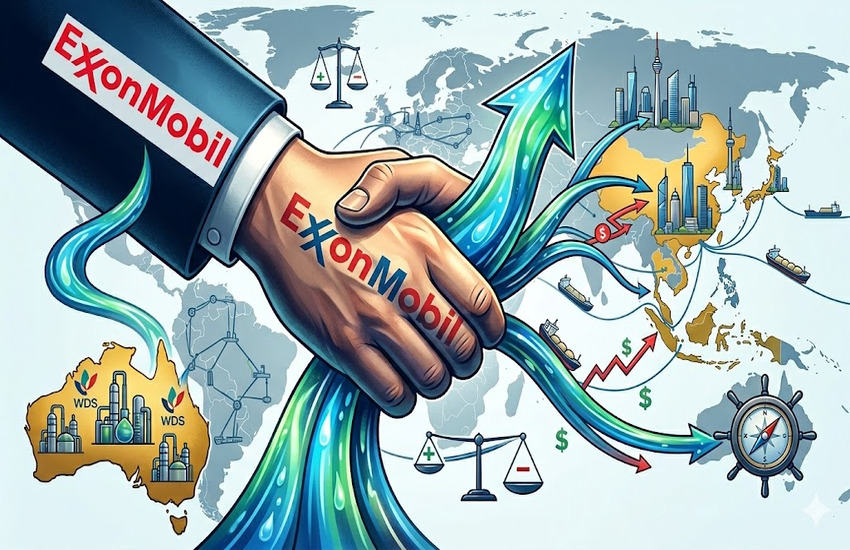
Exxon Mobil (NYSE:XOM) has reportedly been kicking the tires on possible acquisition targets, and Australia’s Woodside Energy (ASX:WDS) appears to be one of the names on the list. Reuters, citing Bloomberg, reported on June 12, 2026, that Exxon has been evaluating Woodside as part of a broader search for deals. Woodside declined to comment, while Exxon did not immediately respond. The market noticed anyway. Woodside’s U.S.-listed shares rose about 6% in morning trading, while Exxon shares gained 0.7%. That may sound like a polite market shrug, but the logic is not hard to spot. Exxon has been leaning harder into LNG, with Golden Pass, Papua New Guinea, and Mozambique already central to its growth plan. Woodside would add scale, geography, and more LNG exposure. For Exxon, this would not just be buying barrels. It would be buying optionality.
LNG Scale Could Get A Serious Boost
Woodside would give Exxon a larger seat at the LNG table. That matters because Exxon has already made LNG a key part of its long-term growth story. On its latest earnings call, management highlighted Golden Pass, where Train 1 has achieved first LNG. The company also expects future trains to add meaningful U.S. export capacity over time.
Woodside would bring another layer to that plan. Its Australian LNG footprint could help Exxon expand outside the U.S. Gulf Coast and Qatar-heavy exposure. That would be useful, especially after recent Middle East disruptions reminded the market that geography is not just a map. It is also a risk factor. More LNG supply points could help Exxon serve Asian buyers with better flexibility and stronger regional coverage.
A Better Asia-Pacific Footprint & Customer Mix
Woodside’s biggest strategic appeal may be location. Australia sits close to some of the world’s most important LNG buyers. Japan, South Korea, China, and Southeast Asia remain critical demand centers. Power demand is also rising as grids absorb more industrial load, data centers, and electrification. Gas keeps showing up as the “not perfect, but useful” fuel in that discussion.
For Exxon, Woodside could deepen customer access in Asia-Pacific. That region is not just about selling molecules. It is about contracts, shipping routes, reliability, and relationships. Exxon already has global trading and logistics capabilities. Adding Woodside’s portfolio could give those capabilities more to optimize. In plain English, Exxon could have more cargoes, more routes, and more choices when markets get weird.
Portfolio Diversification Could Reduce LNG Concentration Risk
Exxon’s LNG business has strong assets, but parts of it are concentrated. Management addressed this directly on the recent call. Qatar remains important, and the partnership with QatarEnergy is still a major strength. Still, recent disruptions showed why concentration can become uncomfortable. Damaged trains, force majeure questions, and repair timelines are not exactly light weekend reading.
Woodside could help balance that exposure. Its Australian base would not remove risk, but it could spread it better. Exxon has repeatedly said scale, integration, and execution matter during disruptions. A Woodside deal would fit that framework. It could give Exxon more ways to reroute supply, meet contracts, and serve customers during stressed markets. That is not glamorous. But in LNG, reliability is often where the money hides.
Operating Synergies Could Come From Trading & Capital Discipline
The less flashy synergy may be operational. Exxon has been building a larger trading organization to optimize its global footprint. Management said this capability helped move barrels and products during recent supply disruptions. Woodside’s LNG and upstream assets could give that system more volume to work with. More scale can create more chances to capture spreads, optimize cargo timing, and manage supply obligations.
Capital discipline would still matter. Exxon has been clear that it does not chase projects just because markets look tight. It wants low-cost supply and advantaged returns. That is the key test for any Woodside acquisition. Exxon could bring project execution, technology, procurement scale, and balance sheet strength. But the purchase price would decide whether those synergies become value creation or just a very expensive corporate souvenir.
Key Takeaways
A Woodside acquisition could give Exxon more LNG scale, better Asia-Pacific exposure, and a more diversified global gas portfolio. It could also strengthen Exxon’s trading and logistics machine. That is the appealing side of the story.
The other side is less tidy. LNG assets are long-cycle, capital-heavy, and politically sensitive. Australia also brings tax, labor, regulatory, and project-cost risks. Exxon would need to avoid overpaying, especially after Woodside shares popped on the report.
Valuation matters here. As of June 12, 2026, Exxon traded at 2.01x LTM EV/revenue, 11.70x LTM EV/EBITDA, 21.17x LTM EV/EBIT, and 24.75x LTM P/E. Those multiples are not distressed. They suggest the market already gives Exxon credit for quality, scale, and resilience.
So yes, Woodside could sharpen Exxon’s LNG strategy. It could also stretch capital allocation if the deal price runs too hot. For now, this looks like a strategic option, not a foregone conclusion. In energy, the first rule still applies: the rocks matter, but the price paid matters just as much.
Disclaimer: We do not hold any positions in the above stock(s). Read our full disclaimer here.